489 years ago, the world was changed by a someone tacking a notice up to a church bulletin board. Who knew?
Okay, it wasn't a bulletin board. But that was what the door of the church in Wittenburg was used for. Martin Luther couldn't possibly have imagined the impact. He was hoping to start a limited discussion to reform a specific abuse within the Church; he ended up unleashing a huge movement that irrevocably altered the nature of the church as a whole. And therein lie both the successes and the failures of the Reformation.
Luther's immediate concern was the issue of indulgences. He did not, at the time of posting the 95 Theses, challenge the authority of the Pope or the sacramental system. He was only beginning to come to an understanding of justification by faith through his reading of Galatians and Romans. The last thing he was looking for was to break off from the established church and start his own.
Yet all these things he did. It is seldom noted how much the Reformation illustrates the law of unintended consequences.
The Reformation breathed new life into a Christianity that had grown corrupt with wealth and worldly power. It established the Bible as the sole authority of Christian faith and practice, removing the power of the Church from that position. It reawakened an understanding of salvation by grace through faith in Christ alone, independent of the mediation of the Church and its sacraments. It put the Bible back into the hands of the people so that they could have access to God's special revelation for themselves. It reduced, to some degree, the gulf separating clergy from laity, reestablished the dignity of all work (not just clerical work), and indirectly fueled a movement toward literacy and free enterprise that had profound socioeconomic effects on the modern world. Martin Luther was arguably the most influential person of the last millenium, and we should thank God for the wonderful things that his courage and insight have bequeathed upon us.
And yet.
The great benefits of the Reformation came at the expense of the division of the Church. For a millenium after the council of Acts 15, there was a sense that the church was a unity, that debates and disputes should be brought to councils and settled, so that Christianity could speak with one voice. Even after the division between East and West, there was still a sense that this was not how things should be, that the divided halves of the Church would one day be reconciled. Luther did not intend to break the Church again, but that is what his actions did. I do not argue that this was unnecessary, and it was not, after all, Luther who did the breaking; the Roman church broke him off, and with him, all those who saw the truth of what he was proclaiming. In the early years of the Reformation there was a dream of a unified Protestant movement, a new True Church raised up in opposition to the decadent false one, a dream that was shattered when Luther wrote on a table at Marburg, "This is my body."
The weak side of the sole authority of Scripture and the priesthood of all believers was the inability of these believers to come to unity on the meaning of Scripture. And once the precedent had been set to divide rather than compromise what one believes to be the truth, division became the hallmark of the Protestant movement. We have divided over the meaning and administration of the Lord's Supper and Baptism; we have divided over various forms of church government; we have divided over differing understandings of the respective roles of predestination and free will; we have divided over differing forms of church services, over differing understandings of spiritual gifts, over differing understandings of the role of believers in civil society. We have divided and divided and divided and divided. Is it any wonder that an unbelieving world increasingly says, "A pox on all your houses"?
What all this division has accomplished, in the long run, is the inability of the Church to function in a unified way to accomplish the goals set out for it by God through Scripture. One of the things that the Reformation did was to change our understanding of the nature of the universal (once called catholic) Church. We pay lip service to the idea that The Church of True Believers as God Sees It is spiritually unified; pity that there is no evidence of it on the ground. Most of our cities are dotted with small churches, each struggling for survival, each competing for its share of the shrinking portion of the population that thinks that Christianity has anything meaningful to say to contemporary life. If only we could find a way to work together! If only we could offer the unbeliever one choice, not dozens!
I don't have an answer. I am a Protestant; I believe in sola scriptura, sola fide, sola gratia. I am deeply grateful to Martin Luther, to William Tyndale, to John Wesley, to them and countless others that struggled, were persecuted, and in some cases died, to give me a Bible in my own language to read and the understanding of access to God and forgiveness of sins through faith in Christ alone. But as a result of being a Protestant, I belong to a particular church that has a particular position on all the topics I have listed above. There is no way, in the contemporary context, to put Humpty Dumpty together again.
The great failure of the Reformation was simply that it didn't actually reform anything. It created something new, in which people who believed something different could have a place to exercise that belief. But it didn't create the opportunity for people who have differing doctrinal convictions to be able to work through those convictions, perhaps come to a mediating position, and perhaps find unity and continue to worship together.
Perhaps we need a new Reformation, to tie up the loose ends of the old one. With that thought in mind, Happy Reformation Day.
Tuesday, October 31, 2006


Monday, October 30, 2006
Wonderful Quote of the Week
"It's time for the whole church to stop sending mixed messages like 'Sex is dirty and unholy, save it for the one you really love and marry'."
--from Ben Witherington, "After the Foley Follies, The Catholic Temperature Rises."
--from Ben Witherington, "After the Foley Follies, The Catholic Temperature Rises."
Saturday, October 28, 2006
Making Your Blog Readable
How to make text and columns larger in Blogger
Tired of skinny columns of tiny text in your blog? I guarantee you, your readers probably are.
A few short hacks in your Blogger template are all that's necessary to make your blog much more readable. As in, small changes in six lines. Sound good? Okay, here goes:
First, you'll have to go to the template tab in the management section of your blog. Choose "Edit HTML." The first, best thing to do here is to back up your present template. Click "Download Full Template" and save it somewhere on your present computer. This way, you can get back to square one if you mess something up.
Now, scroll down in the template code until you come to a section that looks something like this:
I'm using the Blogger Beta version of the Minima Blue template; yours might look somewhat different. See the three lines that have either
Your readers, incidentally, can change the text size themselves, either by using the "View > Text Size" drop down menus in Explorer, or by hitting "Ctrl-plus" (i.e., "Ctrl-=") or "Ctrl-minus" in Firefox. (Sorry, if you're using other browsers, I can't help you.) So there's really no reason on a website to make the main text size anything other than "medium."
Anyway, now that you've got the text to a readable size, you're going to want to change the column sizes. Scroll further down until you see a section that looks like this:
(If you're using the older Blogger, you'll be looking for a section entitled "Content" instead. I don't want to reproduce that code here, to avoid confusion.) See the lines that say
The number of pixels is relatively small because older monitors had a low screen resolution; a larger number could potentially make your blog too wide, with text running off the sides of the screen so your blog would difficult or impossible to read. The crazy thing is, the widths don't need to be specified as a number of pixels at all; they can be specified as a percentage of screen size. That makes a lot more sense, since you don't know the screen sizes of your readers' monitors. If you specify percentages, your blog will resize itself to fit all your readers' screen sizes automatically. Cool, huh?
So each of these three numbers has to be changed to a percent. It's best not to add up to a full 100%, so you have some space between columns and at the edges of the screen. Here's how mine looks:
And that's it. Really. You've got your text and the widths of your columns set; with those six minor changes, you've just overhauled the whole look of your blog. If you like how it looks, this would be a good time to save it and download another backup of your template.
Now in my case, I decided that I wanted my sidebar content and my comments to be in a text a bit smaller than the text of the main posts. No problem. Scrolling further down to the section that deals with comments, look for code that looks like this:
This time you need to actually add in a line that specifies the type size for comments to be small. Here it is:
Now do the same thing to the sidebar content. Here's the code you're looking for:
Add in the same line as above:
And there you have it!
Well, that's it. Give it a shot and spread the word. Readable blogs are only a few short keystrokes away!
A few short hacks in your Blogger template are all that's necessary to make your blog much more readable. As in, small changes in six lines. Sound good? Okay, here goes:
First, you'll have to go to the template tab in the management section of your blog. Choose "Edit HTML." The first, best thing to do here is to back up your present template. Click "Download Full Template" and save it somewhere on your present computer. This way, you can get back to square one if you mess something up.
Now, scroll down in the template code until you come to a section that looks something like this:
body {
  background:$bgcolor;
  margin:0;
  color:$textcolor;
  font:x-small "Trebuchet MS", Trebuchet, Verdana, Sans-Serif;
  font-size/* */:/**/small;
  font-size: /**/small;
  text-align: center;
  }
I'm using the Blogger Beta version of the Minima Blue template; yours might look somewhat different. See the three lines that have either
x-small or small in them? That's what makes your text so tiny. Change all of them to medium, so that your code looks like this:body {
background:$bgcolor;
margin:0;
color:$textcolor;
font:medium "Trebuchet MS", Trebuchet, Verdana, Sans-Serif;
font-size/* */:/**/medium;
font-size: /**/medium;
text-align: center;
}Your readers, incidentally, can change the text size themselves, either by using the "View > Text Size" drop down menus in Explorer, or by hitting "Ctrl-plus" (i.e., "Ctrl-=") or "Ctrl-minus" in Firefox. (Sorry, if you're using other browsers, I can't help you.) So there's really no reason on a website to make the main text size anything other than "medium."
Anyway, now that you've got the text to a readable size, you're going to want to change the column sizes. Scroll further down until you see a section that looks like this:
/* Outer-Wrapper
----------------------------------------------- */
#outer-wrapper {
  width: 660px;
  margin:0 auto;
  padding:10px;
  text-align:left;
  font: $bodyfont;
  }

#main-wrapper {
  width: 410px;
  float: left;
  word-wrap: break-word; /* fix for long text breaking sidebar float in IE */
  }

#sidebar-wrapper {
  width: 220px;
  float: right;
  word-wrap: break-word; /* fix for long text breaking sidebar float in IE */
}
(If you're using the older Blogger, you'll be looking for a section entitled "Content" instead. I don't want to reproduce that code here, to avoid confusion.) See the lines that say
width: and then have a number with px after it? These lines specify the overall width of your blog, the width of your main text, and the width of your sidebar, respectively, as a number of pixels (px).The number of pixels is relatively small because older monitors had a low screen resolution; a larger number could potentially make your blog too wide, with text running off the sides of the screen so your blog would difficult or impossible to read. The crazy thing is, the widths don't need to be specified as a number of pixels at all; they can be specified as a percentage of screen size. That makes a lot more sense, since you don't know the screen sizes of your readers' monitors. If you specify percentages, your blog will resize itself to fit all your readers' screen sizes automatically. Cool, huh?
So each of these three numbers has to be changed to a percent. It's best not to add up to a full 100%, so you have some space between columns and at the edges of the screen. Here's how mine looks:
/* Outer-Wrapper
----------------------------------------------- */
#outer-wrapper {
  width: 90%;
  margin:0 auto;
  padding:10px;
  text-align:left;
  font: $bodyfont;
  }

#main-wrapper {
  width: 70%;
  float: left;
  word-wrap: break-word; /* fix for long text breaking sidebar float in IE */
  }

#sidebar-wrapper {
  width: 25%;
  float: right;
  word-wrap: break-word; /* fix for long text breaking sidebar float in IE */
}
And that's it. Really. You've got your text and the widths of your columns set; with those six minor changes, you've just overhauled the whole look of your blog. If you like how it looks, this would be a good time to save it and download another backup of your template.
Now in my case, I decided that I wanted my sidebar content and my comments to be in a text a bit smaller than the text of the main posts. No problem. Scrolling further down to the section that deals with comments, look for code that looks like this:
#comments-block {
  margin:1em 0 1.5em;
  line-height:1.6em;
  }
This time you need to actually add in a line that specifies the type size for comments to be small. Here it is:
#comments-block {
  margin:1em 0 1.5em;
  line-height:1.6em;
  font-size: small;
  }
Now do the same thing to the sidebar content. Here's the code you're looking for:
.sidebar li {
  margin:0;
  padding:0 0 .25em 15px;
  text-indent:-15px;
  line-height:1.5em;
  }
Add in the same line as above:
.sidebar li {
  margin:0;
  padding:0 0 .25em 15px;
  text-indent:-15px;
  line-height:1.5em;
  font-size: small;
  }
And there you have it!
Well, that's it. Give it a shot and spread the word. Readable blogs are only a few short keystrokes away!
Friday, October 20, 2006
Marriage, RIP
Dr Ray Pritchard cites a Seattle Times article claiming, based on US Census statistics, that households headed by a married couple had fallen to less than 50% of total US households. A few numbers demonstrate the trend:
Profound isn't the half of it. This is the iceburg ripping into the hull of the Titanic.
Prichard discusses challenges for the Church to minister to the increasingly diverse groups of non-married people, rather than focusing on married families and having on the side a generic "singles" ministry. These challenges are certainly real and Prichard's suggestions are generally good, but don't address the implications of the social changes reflected by these statistics. Watters appears (in the single quote reported) to be attempting to minimize the issue. Marriage is only being delayed, not rejected. This seems better; in truth, it's almost as bad.
What we're seeing here is something that God designed and intended to function together as an organic whole being dissected into its constituent parts: marriage, parenthood, sexuality, and the image of God. The first social relationship ever entered into was created specifically by God. Here's the narrative:
The elements of marriage, sexuality, parenthood, and the image of God are all woven together in this fabric. Marriage is quite simply the fundamental social relationship; it is the first one in existence; it is the only one, in this narrative, that is allowed to trump prior family ties. It is the context in which sexuality occurs; it is the context in which parenthood occurs; it reflects the image of God (the relationship among the members of the Trinity) and transmits that image to the children. The metaphor of threads woven together into a fabric doesn't really do it justice: it's more like the separate organs of a living, breathing, multifaceted organism designed by God and given to us.
Our society is taking this living, organic being and inexorably ripping it into its constituent parts, in the naive assumption that the patient will survive the operation. Why should marriage ("a piece of paper") be necessary if two people are truly in love? Why should marriage be permanent? Why should sexuality be reserved only for marriage? Why should pregnancy be a necessary consideration for sexuality? Why should parenthood be reserved for married couples? Why should any of this be affected by a person's religious beliefs?
The fact that marriage is only being delayed, not denied, doesn't mean that sexuality is being delayed. The sad fact is that this is true even within the church--and everyone knows it. God calls some people to singleness. I'm not arguing against that, and we need to have more respect and honor for those who have been called to that life. But He calls people to celibate singleness, for a purpose; not a prolonged indulgent adolescence in which sexual relationships are repeatedly entered into and ended. We don't recognize what we're doing to ourselves when we live like that: repeatedly creating and ripping apart a one-flesh bond that God intended to last throughout our lives. When couples who have prolonged singleness (but not sexuality) finally do get married, how do they make the shift into a new mode of life, in which this relationship is different, this one will last forever? The sad truth is that often they never do. Statistics show that people who live together before marriage have a 50% or more higher chance of divorce than those who do not; this is true whether it is the cohabitating couple who marry one another or people who have cohabitated with one or more other people before marriage.
The consequences are not merely individual. Married couples and parents have a vested interest in providing for one another and for their children; when these relationships break up, that vested interest breaks down (hence "deadbeat dads") and more children grow up in poverty, more must be provided for by the state or charitable organizations. Parents have a vested interest in caring for their own children and usually do without payment a better job than paid child care. Children who grow up in intact families tend to have a greater sense of security than those who grow up without two parents in the home, and tend to have fewer social adjustment problems; it is likely that the current trend toward deferred marriage is at least in part a result of increasing numbers of children of divorce or single parenthood entering adulthood without having had successful marriages modeled for them, and understandably being anxious about entering into such a significant commitment. Marriage and the nuclear family have been called the building block of civilization; I suspect that's not far off the mark.
Just so this post is not misunderstood, I am not taking a position against birth control, or against sex for purposes other than reproduction, or against divorce in all circumstances, or condemning every instance of single parenthood, or advocating very young marriage. The Bible itself places limits on some of these principles; with regard to some there are other social factors to take into account; and some are issues on which honest and sincere believers can disagree.
My point is simply a lament for the inexorable destruction of something God gave to us as a precious gift. He gave us a fundamental human relationship that provided the context, and much of the transcendent meaning, for sexuality and parenthood. I am blessed with a wonderful marriage and family, and I wish that everyone who doesn't specifically have a gift of celibate singleness could know the joy that marriage and family can be. It saddens me that so many people, even believers, don't have that. It saddens me more that so many have given up on it before ever giving it a chance.
HT: Smart Christian. For much worthwhile information and statistics on the topic of divorce, see the statistics page of the Divorce Reform Page.
1930: 84%The Times article quotes Steve Watters, director of young adults for Focus on the Family, as saying that "the trend of fewer married couples was more a reflection of delaying marriage than rejection of it." Nonetheless, as the article states, "A growing number of adults are spending more of their lives single or living unmarried with partners, and the potential social and economic implications are profound."
1990: 56%
2006: 49.7%
Profound isn't the half of it. This is the iceburg ripping into the hull of the Titanic.
Prichard discusses challenges for the Church to minister to the increasingly diverse groups of non-married people, rather than focusing on married families and having on the side a generic "singles" ministry. These challenges are certainly real and Prichard's suggestions are generally good, but don't address the implications of the social changes reflected by these statistics. Watters appears (in the single quote reported) to be attempting to minimize the issue. Marriage is only being delayed, not rejected. This seems better; in truth, it's almost as bad.
What we're seeing here is something that God designed and intended to function together as an organic whole being dissected into its constituent parts: marriage, parenthood, sexuality, and the image of God. The first social relationship ever entered into was created specifically by God. Here's the narrative:
Then God said, "Let us make man in our image, in our likeness...." So God created man in his own image, in the image of God he created him; male and female he created them. God blessed them and said to them, "Be fruitful and increase in number; fill the earth and subdue it...."The LORD God said, "It is not good for the man to be alone. I will make a helper suitable for him."... So the LORD God caused the man to fall into a deep sleep; and while he was sleeping, he took one of the man's ribs and closed up the place with flesh. Then the LORD God made a woman from the rib he had taken out of the man, and he brought her to the man. The man said, "This is now bone of my bones and flesh of my flesh; she shall be called 'woman,' for she was taken out of man." For this reason a man will leave his father and mother and be united to his wife, and they will become one flesh. The man and his wife were both naked, and they felt no shame.... Adam named his wife Eve, because she would become the mother of all the living.... Adam lay with his wife Eve, and she became pregnant and gave birth to Cain. She said, "With the help of the LORD I have brought forth a man." Later she gave birth to his brother Abel.... When God created man, he made him in the likeness of God. He created them male and female and blessed them. And when they were created, he called them "man." When Adam had lived 130 years, he had a son in his own likeness, in his own image; and he named him Seth. (Genesis 1:26-28; 2:18, 21-25; 3:20; 4:1; 5:1-3 NIV)
The elements of marriage, sexuality, parenthood, and the image of God are all woven together in this fabric. Marriage is quite simply the fundamental social relationship; it is the first one in existence; it is the only one, in this narrative, that is allowed to trump prior family ties. It is the context in which sexuality occurs; it is the context in which parenthood occurs; it reflects the image of God (the relationship among the members of the Trinity) and transmits that image to the children. The metaphor of threads woven together into a fabric doesn't really do it justice: it's more like the separate organs of a living, breathing, multifaceted organism designed by God and given to us.
Our society is taking this living, organic being and inexorably ripping it into its constituent parts, in the naive assumption that the patient will survive the operation. Why should marriage ("a piece of paper") be necessary if two people are truly in love? Why should marriage be permanent? Why should sexuality be reserved only for marriage? Why should pregnancy be a necessary consideration for sexuality? Why should parenthood be reserved for married couples? Why should any of this be affected by a person's religious beliefs?
The fact that marriage is only being delayed, not denied, doesn't mean that sexuality is being delayed. The sad fact is that this is true even within the church--and everyone knows it. God calls some people to singleness. I'm not arguing against that, and we need to have more respect and honor for those who have been called to that life. But He calls people to celibate singleness, for a purpose; not a prolonged indulgent adolescence in which sexual relationships are repeatedly entered into and ended. We don't recognize what we're doing to ourselves when we live like that: repeatedly creating and ripping apart a one-flesh bond that God intended to last throughout our lives. When couples who have prolonged singleness (but not sexuality) finally do get married, how do they make the shift into a new mode of life, in which this relationship is different, this one will last forever? The sad truth is that often they never do. Statistics show that people who live together before marriage have a 50% or more higher chance of divorce than those who do not; this is true whether it is the cohabitating couple who marry one another or people who have cohabitated with one or more other people before marriage.
The consequences are not merely individual. Married couples and parents have a vested interest in providing for one another and for their children; when these relationships break up, that vested interest breaks down (hence "deadbeat dads") and more children grow up in poverty, more must be provided for by the state or charitable organizations. Parents have a vested interest in caring for their own children and usually do without payment a better job than paid child care. Children who grow up in intact families tend to have a greater sense of security than those who grow up without two parents in the home, and tend to have fewer social adjustment problems; it is likely that the current trend toward deferred marriage is at least in part a result of increasing numbers of children of divorce or single parenthood entering adulthood without having had successful marriages modeled for them, and understandably being anxious about entering into such a significant commitment. Marriage and the nuclear family have been called the building block of civilization; I suspect that's not far off the mark.
Just so this post is not misunderstood, I am not taking a position against birth control, or against sex for purposes other than reproduction, or against divorce in all circumstances, or condemning every instance of single parenthood, or advocating very young marriage. The Bible itself places limits on some of these principles; with regard to some there are other social factors to take into account; and some are issues on which honest and sincere believers can disagree.
My point is simply a lament for the inexorable destruction of something God gave to us as a precious gift. He gave us a fundamental human relationship that provided the context, and much of the transcendent meaning, for sexuality and parenthood. I am blessed with a wonderful marriage and family, and I wish that everyone who doesn't specifically have a gift of celibate singleness could know the joy that marriage and family can be. It saddens me that so many people, even believers, don't have that. It saddens me more that so many have given up on it before ever giving it a chance.
HT: Smart Christian. For much worthwhile information and statistics on the topic of divorce, see the statistics page of the Divorce Reform Page.
Thursday, October 19, 2006
Becoming Missional
I'd like to welcome Becoming Missional to the blogroll. Jerry's most recent post has a fascinating YouTube link showing Bono at a Washington prayer breakfast. Bono's remarks are extremely challenging, and much more overtly Christian than anything else I've heard (or read) of him.
Jerry also has some interesting stuff on a church transitioning from traditional to missional. I don't yet know if I'm a "friend of missional." I'm probably an acquaintance. I'm really not sure if there's something genuinely new here, or if there is largely idealism here that hasn't yet hit the wall of the sometimes painful realities of life in the church world. Even if it's the latter, there's something to be said for renewing idealism periodically.
Jerry also has some interesting stuff on a church transitioning from traditional to missional. I don't yet know if I'm a "friend of missional." I'm probably an acquaintance. I'm really not sure if there's something genuinely new here, or if there is largely idealism here that hasn't yet hit the wall of the sometimes painful realities of life in the church world. Even if it's the latter, there's something to be said for renewing idealism periodically.
Saturday, October 14, 2006
The Problem of Subculture and Missional Living
Rich Tatum wrote, as a comment to his own piece on the Robert Duvall movie, The Apostle,
Subcultures are merely homogeneous groups that exist within a larger culture and share various cultural norms that can include specialized knowledge, terminology, dress, rituals, customs, and expectations. They exist throughout society, among ethnic groups, professional vocations, aficionados of various sports or types of entertainment, as well as other groupings. Get a group of engineers or doctors or political junkies or comic book fans or football fans together, and the commonalities will come out pretty quickly. Someone may think it ridiculous to go to a convention wearing fake pointy ears, but perfectly normal to go shirtless with a painted chest to a football game. Subcultures are a necessary component of any larger culture that isn't monolithic. It's rather pointless to argue that a Christian subculture shouldn't exist; that would be equivalent to arguing that people with common experiences and interests should pretend as though they didn't have anything in common. It defies human nature.
In some ways, the Christian subculture is a remnant of what the larger American culture used to be. I once read a comparison of Franklin Roosevelt's and Ronald Reagan's first inaugural addresses; it's astonishing how much more biblical quotations and allusions were in the "liberal" Roosevelt's address as compared with Reagan's. Despite the fact that Reagan was the darling of the religious right, American culture had shifted dramatically in forty-eight years, and the shared biblical frame of reference that had existed in the larger culture was virtually gone. I am not here subscribing to the notion of a golden age of "Christian America." When would that have existed--during the days of slavery? I am simply acknowledging that there was once a shared cultural heritage that included a great deal more biblical knowledge than is common today. Whether people believed in them or not, or lived according to biblical tenets or not, Bible stories provided much of the content for an American shared cultural heritage. In large measure, the modern Christian subculture is merely a holdover of that earlier heritage; and so there is truth in the charge that the Christian subculture is merely a response to a larger culture that is by turns indifferent and hostile.
Nonetheless, it's hardly a positive response to huddle together in defensive fashion. Scripture calls us to remain in the world, even as we resist the temptation to become a part of it. Light in the darkness; salt on a tasteless meal: Jesus' metaphors for who we are imply that we are supposed to make a difference in the world around us, which implies both that we are engaged in that world and yet form a perceptible contrast to it. Be involved, but be different. That's our mandate.
Unfortunately, this is part of the problem: even if we have a shared vocabulary, social expectations, and rituals, we are tending not to be very different from the surrounding culture in ways that really matter--the behaviors that are supposed to mark Christian faith. We get divorced at about the same rate as non-Christians; we are influenced to almost the same degree by mass media; and practice of such spiritual disciplines as prayer and Bible study are embarrassingly modest. Often, we've got it exactly backwards. We know how to dress, talk, and behave when we gather together as Christians or happen to meet one another, but our lives too often don't witness to the power of a transforming relationship with the infinite and holy creator of the universe. We're the same as everybody else, except for the secret handshake. That's an overstatement--but by how much?
One of the emphases of the emerging church movement is something called "missional living." I'll be honest: I know about this much more from reading about it than from experiencing it firsthand. But the concept is based on what missionaries have long understood: that to reach a people group different from yourself, you have to adopt as much as possible the customs and behavior of the group you're trying to reach, for the purpose of securing a hearing for the gospel. People who attempt to live missionally specifically try to avoid the look and manner of "church people"--the things that tend to separate us from the world at large--while actively engaging unbelievers and offering a genuine difference.
I don't know how much of this is real, how much is wishful thinking, and how much is simply motivated by a desire to get out from under traditional taboos within evangelicalism. I've known too many people spouting anti-legalistic jargon who, at bottom, simply wanted to live more worldly. And yet something in my soul longs for this. The prophetic voice of the Church has collapsed into the "culture wars," which themselves have largely become little more than a mandate to vote Republican. I can't help but feel that we were supposed to be... something else.
What do you think about missional living? Anyone have personal experience in this area? Is it something only single twentysomethings can glom onto, or can we middle-aged people also do it (in a way that wouldn't be ridiculous)? Any thoughts?
If you like this post, you may be interested in my book, What's Wrong with Outreach?

After watching The Apostle I walked out of the theater amazed that Duvall, an admitted outsider, had worked so hard to get our culture right–and he very nearly succeeded.This comment made me begin thinking about the problem of subculture. Like it or not, American Christians live in a subculture that is getting increasingly marginalized. (I can't speak for believers elsewhere in the world. Sorry, this post is going to be rather USA-centric.) When we address this topic at all, it is either with dismissive contempt--the speaker imagines that he is not a part of this subculture, and is usually referring to a branch of the church that appears to him to be exasperatingly "out of touch" with the surrounding culture--or with a sort of righteous indignation--the speaker views the surrounding culture as increasingly hostile, and retreat into one's own cultural norms is defended as "taking a stand" for moral uprightness. Both views are oversimplifications of a problematic issue.
Subcultures are merely homogeneous groups that exist within a larger culture and share various cultural norms that can include specialized knowledge, terminology, dress, rituals, customs, and expectations. They exist throughout society, among ethnic groups, professional vocations, aficionados of various sports or types of entertainment, as well as other groupings. Get a group of engineers or doctors or political junkies or comic book fans or football fans together, and the commonalities will come out pretty quickly. Someone may think it ridiculous to go to a convention wearing fake pointy ears, but perfectly normal to go shirtless with a painted chest to a football game. Subcultures are a necessary component of any larger culture that isn't monolithic. It's rather pointless to argue that a Christian subculture shouldn't exist; that would be equivalent to arguing that people with common experiences and interests should pretend as though they didn't have anything in common. It defies human nature.
In some ways, the Christian subculture is a remnant of what the larger American culture used to be. I once read a comparison of Franklin Roosevelt's and Ronald Reagan's first inaugural addresses; it's astonishing how much more biblical quotations and allusions were in the "liberal" Roosevelt's address as compared with Reagan's. Despite the fact that Reagan was the darling of the religious right, American culture had shifted dramatically in forty-eight years, and the shared biblical frame of reference that had existed in the larger culture was virtually gone. I am not here subscribing to the notion of a golden age of "Christian America." When would that have existed--during the days of slavery? I am simply acknowledging that there was once a shared cultural heritage that included a great deal more biblical knowledge than is common today. Whether people believed in them or not, or lived according to biblical tenets or not, Bible stories provided much of the content for an American shared cultural heritage. In large measure, the modern Christian subculture is merely a holdover of that earlier heritage; and so there is truth in the charge that the Christian subculture is merely a response to a larger culture that is by turns indifferent and hostile.
Nonetheless, it's hardly a positive response to huddle together in defensive fashion. Scripture calls us to remain in the world, even as we resist the temptation to become a part of it. Light in the darkness; salt on a tasteless meal: Jesus' metaphors for who we are imply that we are supposed to make a difference in the world around us, which implies both that we are engaged in that world and yet form a perceptible contrast to it. Be involved, but be different. That's our mandate.
Unfortunately, this is part of the problem: even if we have a shared vocabulary, social expectations, and rituals, we are tending not to be very different from the surrounding culture in ways that really matter--the behaviors that are supposed to mark Christian faith. We get divorced at about the same rate as non-Christians; we are influenced to almost the same degree by mass media; and practice of such spiritual disciplines as prayer and Bible study are embarrassingly modest. Often, we've got it exactly backwards. We know how to dress, talk, and behave when we gather together as Christians or happen to meet one another, but our lives too often don't witness to the power of a transforming relationship with the infinite and holy creator of the universe. We're the same as everybody else, except for the secret handshake. That's an overstatement--but by how much?
One of the emphases of the emerging church movement is something called "missional living." I'll be honest: I know about this much more from reading about it than from experiencing it firsthand. But the concept is based on what missionaries have long understood: that to reach a people group different from yourself, you have to adopt as much as possible the customs and behavior of the group you're trying to reach, for the purpose of securing a hearing for the gospel. People who attempt to live missionally specifically try to avoid the look and manner of "church people"--the things that tend to separate us from the world at large--while actively engaging unbelievers and offering a genuine difference.
I don't know how much of this is real, how much is wishful thinking, and how much is simply motivated by a desire to get out from under traditional taboos within evangelicalism. I've known too many people spouting anti-legalistic jargon who, at bottom, simply wanted to live more worldly. And yet something in my soul longs for this. The prophetic voice of the Church has collapsed into the "culture wars," which themselves have largely become little more than a mandate to vote Republican. I can't help but feel that we were supposed to be... something else.
What do you think about missional living? Anyone have personal experience in this area? Is it something only single twentysomethings can glom onto, or can we middle-aged people also do it (in a way that wouldn't be ridiculous)? Any thoughts?
If you like this post, you may be interested in my book, What's Wrong with Outreach?
Thursday, October 12, 2006
Have a Cup of Coffee with Christoph Fischer
I'd like to welcome my cup of coffee to the blogroll. Christoph Fischer is a pentecostal pastor and doctoral candidate (yes, I did say that in the same breath) in Germany. Here's a sample of his work, from his post Ramblings on teaching in the Pentecostal church:
Postmodernism despises truth. In fact, postmodernism simply abolishes the notion of truth as we knew it before. “The truth” (which, incidentally, Jesus claimed to be) does not exist any more as such, but, at best we have individual approaches to such a truth, tainted as they are by individual circumstances, presuppositions, characteristics, personality issues, whatever.You'll have to read the rest to see how good this really is. It doesn't appear that Christoph posts all that often, which is a shame, but what he has is great stuff.
. . . . . . . . . . . . . . . . . . . . . .
It is exactly at this point that the old Pentecostal hermeneutic principle comes in. I might not be able to access an objective truth which is blocked out (at least partially) and therefore tainted by my own subjectivity. But someone else can.
Wednesday, October 11, 2006
Emotion, Scheliermacher, Edwards, and the JollyBlogger
David Wayne has a curious post up comparing the role of emotion in the respective theologies of Friedrich Schleiermacher and Jonathan Edwards. David probably has as much or more of a grasp on the theologies of both men than I do, so all I can do regarding the specific point at hand is to echo his own sense that while Edwards thought the "affections" were important, for Schleiermacher they were all-encompassing (he wrote that music--by which he meant music itself, not lyrics--was a better expression of spiritual truth than any sort of rational discourse).
The more interesting point, to me, is the fact that David relates this to an ongoing discussion largely among Adrian Warnock, the Pyromaniacs, and David himself regarding the role of emotions and charismatic gifts in Christian experience. It seems to me that perhaps all parties are laboring under the misconception of regarding charismatic experience as inherently emotional (as opposed to other types of Christian experience, which presumably would be more rational, or at least more balanced between emotionalism and rationality). Even though Adrian (the charismatic in this discussion) himself made the appeal for a more "experiential" faith, and Pentecostal/charismatic services tend to be more overtly demonstrative of emotion, this identification of emotion and charismatic gifts lends itself to the idea that there is nothing to the gifts but emotion. It might even be thought that emotion itself is the only goal of charismatic Christian experience. That is emphatically not what Pentecostals and charismatics believe. Most of the churches and worship environments I've been a part of have been quite explicit about the difference between what we believe comes from God and what can come from one's own heightened emotions ("in the flesh" is generally how it's termed). Moreover, it seems to me that charismatics hardly have a corner on religious emotion. It seems to me that fear of too much emotional expression is just as much an emotion as anything else.
It seems to me that this view of charismatic experience is what suggested the Schleiermacher-Edwards comparison to David. To be sure, he didn't oppose them as Schleiermacher = emotion = bad and Edwards = rationality = good. In fact, he said they were actually very similar in their romanticism, and therefore it was something other than stressing emotional experience that made them either good or bad. He's getting away from the whole "emotion is the crux of the matter" mentality, which I view as positive. And yet, when they're compared and related to the charismatic-cessationist debate, it appears that Edwards falls into the camp of the balanced cessationist and therefore charismatics are left with the fount of theological liberalism as their representative of emotional, experiential Christianity. And isn't that actually the concern of many cessationists? that in emphasizing experience and emotion, we will deemphesize scriptural truth?
The comparison could be turned on its head, of course. We could compare, for example, John Wesley as the representative of emotional, vibrant faith (balanced with a firm commitment to scriptural truth), and Rudolph Bultmann as the representative of overrationalized exegesis. It would be just as wrong. The true gulf lies not between charismatics and cessationists, but between all of us who accept the authority of Scripture and all of those who do not. Our quibbles of interpretation are nothing compared to the foundational mistake of leaving behind the inspiration and authority of Scripture.
Thursday, October 05, 2006
Johnny Lingo and the Ten-Cow Wife
"So tweasuwe youw wife--"I read this story years ago in the Reader's Digest. It made a significant impact on me. One of the main keys of a happy marriage is to treat your spouse like the person you want them to be. I've never understood people who got married and then complained about the "ball and chain" for the rest of their lives. Statistics have shown that evangelical Christians have marriages no better than society as a whole. This is a tragic shame, and a horrible witness. God wants our marriages to represent His love for His people. I hope this little story reminds us of how we should be treating the person who should be the closest one in our lives.
--The Impressive Clergyman
"Get Johnny Lingo to help you find what you want and then let him do the bargaining," advised Shenkin as I sat on the veranda of his guest house and wondered whether to visit Nurabandi. "He'll earn his commission four times over. Johnny knows values and how to make a deal."
"Johnny Lingo." The chubby boy on the veranda steps hooted the name, then hugged his knees and rocked with shrill laughter.
"Be quiet," said his father and the laughter grew silent. "Johnny Lingo's the sharpest trader in this part of the Pacific."
The simple statement made the boy choke and almost roll off the steps. Smiles broadened on the faces of the villagers standing nearby.
"What goes on?" I demanded. "Everybody around here tells me to get in touch with Johnny Lingo and then breaks up. It is some kind of trick, a wild-goose chase, like sending someone for a left-handed wrench? I there no such person or is he the village idiot or what? Let me in on the joke."
"Not idiot," said Shenkin. "Only one thing. Five months ago, at festival time, Johnny came to Kiniwata and found himself a wife. He paid her father ten cows!"
He spoke the last words with great solemnity and I knew enough about island customs to be thorougly impressed. Two or three cows would buy a fair-to-middling wife, four or five a highly satisfactory one.
"Ten cows!" I said. "She must have been a beauty that takes your breath away."
"That's why they laugh," my guest said. "It would be kindness to call her plain. She was little and skinny with no--ah--endowments. She walked with her shoulders hunched and her head ducked, as if she was trying to hide behind herself. Her cheeks had no color, her eyes never opened beyond a slit and her hair was a tangled mop half over her face. She was scared of her own shadow, frightened by her own voice. She was afraid to laugh in public. She never romped with the girls, so how could she attract the boys?"
"But she attracted Johnny?"
This is the story Shenkin told me:
"All the way to the council tent the cousins were urging Sam to try for a good settlement. Ask for three cows, they told him, and hold out for two until you're sure he'll pay one. But Sam was in such a stew and so afraid there'd be some slip in this marriage chance for Sarita that they knew he wouldn't hold out for anything. So while they waited they resigned themselves to accepting one cow, and thought, instead, of their luck in getting such a good husband for Sarita. Then Johnny came into the tent and, without waiting for a word from any of them, went straight up to Sam Karoo, grasped his hand and said, "Father of Sarita, I offer ten cows for your daughter." And he delivered the cows.
"As soon as it was over Johnny took Sarita to the island of Cho for the first week of marriage. Then they went home to Narabundi and we haven't seen them since. Except at festival time, there's not much travel between the islands."
This story interested me so I decided to investigate.
The next day I reached the island where Johnny lived. When I met the slim, serious man, he welcomed me to his home with a grace that made me feel like the owner. I was glad that from his own people he had respect unmingled with mockery.
I told him that his people had told me about him.
"They speak much of me on that island? What do they say?"
"They say you are a sharp trader," I said. "They also say the marriage settlement that you made for your wife was ten cows." I paused, then went on, coming as close to a direct question as I could. "They wonder why."
"They say that?" His eyes lighted with pleasure. He seemed not to have noticed the question. "Everyone in Kiniwata knows about the ten cows?"
I nodded.
"And in Narabundi everyone knows it, too." His chest expanded with satisfaction. "Always and forever, when they speak of marriage settlements, it will be remembered that Johnny Lingo paid ten cows for Sarita."
So that's the anwer, I thought with disappointment. All this mystery and wonder and the explanation's only vanity. It's not enough for his ego to be known as the smartest, the strongest, the quickest. He had to make himself famous for his way of buying a wife. I was tempted to deflate him by reporting that in Kiniwata he was laughed at for a fool.
And then I saw her. Through the glass-beaded portieres that simmered in the archway, I watched her enter the adjoining room to place a bowl of blossoms on the dining table. She stood still a moment to smile with sweet gravity at the young man beside me. Then she went swiftly out again. She was the most beautiful woman I have ever seen. Not with the beauty of the girl who carries fruit. That now seemed cheap, common, earthbound. This girl had an ethereal loveliness that was at the same time from the heart of nature. The dew-fresh flowers with which she'd pinned back her lustrous black hair accented the glow of her cheeks. The lift of her shoulders, the tilt of her chin, the sparkle of her eyes all spelled a pride to which no one could deny her the right. And as she turned to leave she moved with the grace that made her look like a queen who might, with enchantment, turn into a kitten.
When she was out of sight I turned back to Jonny Lingo and found him looking at me with eyes that reflected the pride of the girl's.
"You admire her?" he murmured.
"She--she's glorious. Who is she?"
"My wife."
I stared at him blankly. Was this some custom I had not heard about? Do they practice polygamy here? He, for his ten cows, bought both Sarita and this other? Before I could form a question he spoke again.
"This is only one Sarita." His way of saying the words gave them a special significance. "Perhaps you wish to say she does not look the way they say she looked in Kiniwata."
"She doesn't." The impact of the girl's appearance made me forget tact. "I heard she was homely, or at least nondescript. They all make fun of you because you let yourself by cheated by Sam Karoo."
"You think he cheated me? You think ten cows were too many?" A slow smile slid over his lips as I shook my head. "She can see her father and her friends again. And they can see her. Do you think anyone will make fun of us then? Much has happened to change her. Much in particular happened the day she went away."
"You mean she married you?"
"That, yes. But most of all, I mean the arrangements for the marriage."
"Arrangements?"
"Do you ever think," he asked reflectively, "what it does to a woman when she knows that the price her husband has paid is the lowest price for which she can be bought? And then later, when all the women talk, as women do, they boast of what their husbands paid for them. One says four cows, another maybe six. How does she feel--the woman who was sold for one or two? This could not happen to my Sarita."
"Then you paid that unprecendented number of cows just to make your wife happy?"
"Happy?" He seemed to turn the word over on his tongue, as if to test its meaning. "I wanted Sarita to be happy, yes, but I wanted more than that. You say she's different from the way they remember her in Kiniwata. This is true. Many things can change a woman. Things that happen inside, things that happen outside. But the thing that matters most is what she thinks about herself. In Kiniwata, Sarita believed she was worth nothing. Now she knows that she is worth more than any other woman on the islands."
"Then you wanted..."
"I wanted to marry Sarita. I loved her and no other woman."
"But--" I was close to understanding.
"But," he finished softly, "I wanted an ten-cow wife."
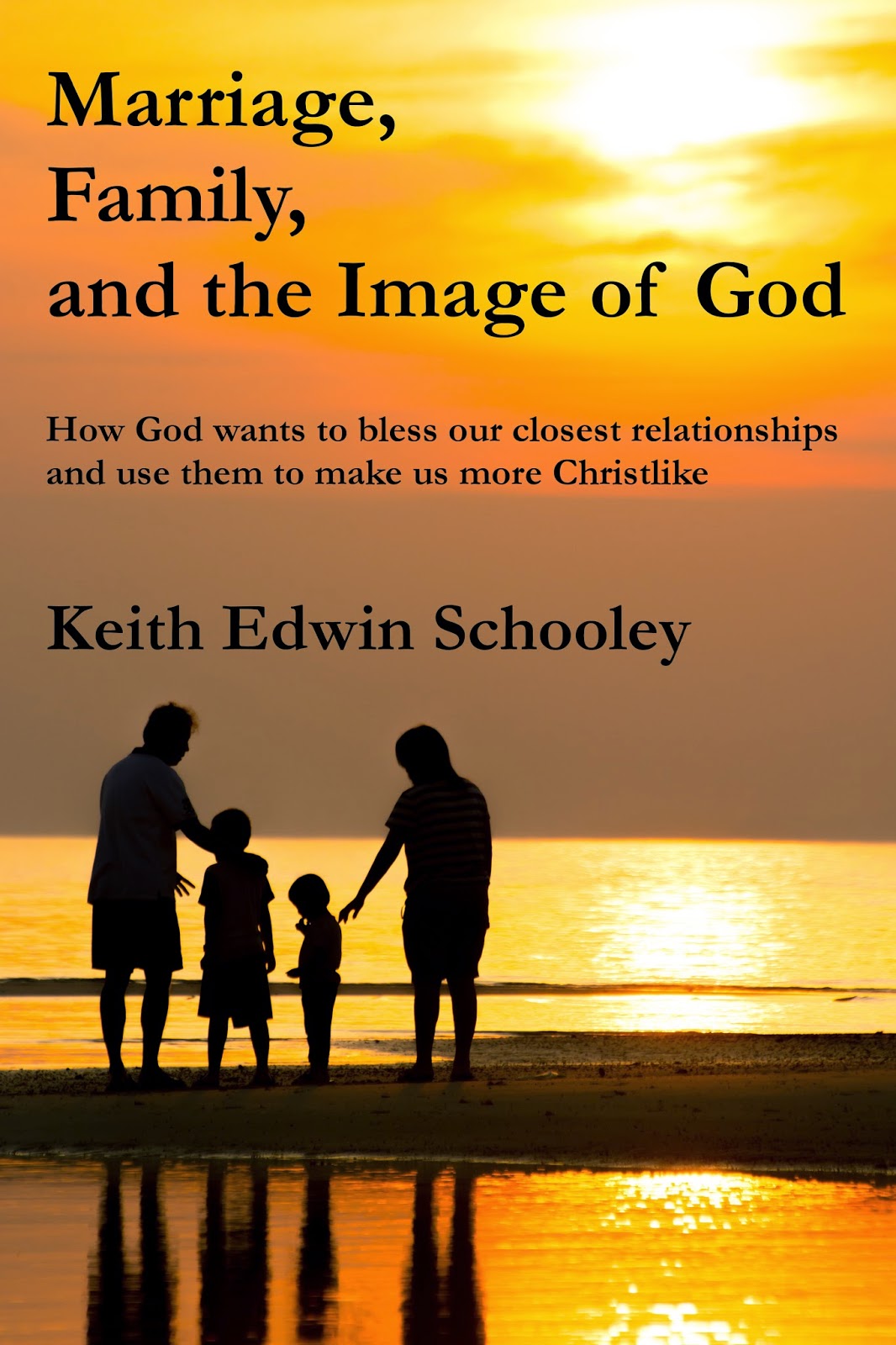
For more on marriage, check out my book, Marriage, Family, and the Image of God .
Wednesday, October 04, 2006
Reflections on the Amish Schoolhouse Murders
I lived for some time in rural Pennsylvania, and so I have felt with peculiar horror the developing story of the gunman who wounded five girls and killed five others and himself in an Amish country schoolhouse. I don't claim to have anything profound to share on the subject, but I do have a few reflections.
- When the story first broke, all that was being said, to my knowledge, was that the gunman was reacting to something that had happened to him twenty years earlier. So it appeared to be a revenge thing. Does anything illustrate the desperate circumstances that the world has fallen into better than the increasing tendency for people to lash out in lethal rage against people who have never harmed them, people whom they don't even know? How is it that people have such intense hatred in their hearts? How is it that we are assimilating this sort of thing into our collective consciousness more and more readily?
- Later it developed that 20-year-old issue that the gunman had dealt with was his own molesting of family members (by his own admission; it has not been confirmed), and that his intent had evidently been to rape and torture the young women whom he held captive. He had kept these desires hidden for years, only to explode in vicious destruction. And yet, many persist in trying to make sexuality separate from all other morals or ethics. Anything is permissible, it seems, as long as it is kept locked in the imagination or between consenting adults. But as we see here, by the time it does explode into violence, it is too late to do anything about it. If only he had found salvation, healing, and deliverance through our Lord!
- This kind of attack on what the man probably assumed were the most innocent victims he could find can only be regarded as demonic. Can there be any doubt that we are truly in a spiritual war, and who our enemy is? Nero fiddled while Rome burned; will the epitaph on the contemporary church be that we navel-gazed while our civilization crumbled and the bearers of God's image all around us perished without a knowledge of the truth?
- It is impossible for us as believers to cloister ourselves away so that the world can't "get at" us. The Amish are about as far removed from contemporary society as you can get, and yet it crashed in on them. I am not specifically indicting the Amish in this; they, in fact, see tourism as their opportunity to show the outside world a stark difference. But we all have our ways of cloistering ourselves away, socially if not geographically and culturally. Our business is to be in the world as an influence, not safely huddled away from it.
- An interview I saw with an Amish man was quite revealing. He talked about the importance of forgiveness, and mentioned that the gunman's wife and children were also victims in this tragedy. He was, of course, right--that family is scarred for life by the actions of that husband and father. Can you imagine being a child and coming home from school to find out that not only is Daddy dead, but that he was a murderer and everyone in the world knows about it? We seriously need to pray for that family. But I was deeply impressed that one of the victims of this tragedy could have the perspective to recognize the need of another, very different sort of victim.
- This brings into question the type of theological discussion encouraged by this blog and many others. How much difference does dotting one's theological 'i's and crossing one's theological 't's correctly matter in a world that is this lost, this corrupted, fallen this low? I still think that discussion of various theological issues is of value--how could reflection on what God has revealed in His Word not be of value?--but it is clearly of secondary importance to the overall war that all believers face against the enemy of our souls.
We all have different gifts, different interests, different parts to play in the Body of Christ. We don't all have to do the same things or react the same way to momentous events like this. But I hope whatever reactions we have, whatever we do, that we will allow events like this to remind us of the larger fight that we are engaged in, and the larger purpose for which we are placed on this earth. We are called to make a difference, wherever we are, whatever we're doing, to draw people to our Lord. That is what being salt and light means.
Saturday, September 30, 2006
Get To Know Me!
What prayer is really about
I was recently at a pastors' meeting at which the subject of prayer was being discussed. The general theme was that if we want to see things happen within the church--people saved and healed, the church healthy and growing, the power of God working in and through us--then it all starts with prayer. Prayer must be made a priority. We need to devote time to it, we need to gather together for it, we need to be examples of it.
We also discussed obstacles to that: the sense in Western culture that prayer isn't actually "doing anything," the struggles that some of us experience in keeping focused, the general busyness of our lives, the tendency we have to focus on methodology rather than to rely on God, the fact that the results of prayer are often delayed and we expect instant answers.
Being relatively new to the group, I mainly listened, but as the discussion proceeded, an idea jelled in my mind. All too often, we use prayer as a means to an end--and the end is something we've decided ahead of time, before we begin to pray. (Isn't that, after all, the meaning of the term, "prayer request"?) We are essentially bringing our agenda to God and asking Him (politely, of course) to do our bidding. Yes, we've all heard teaching about various types and stages of prayer, but really, don't we often treat the other stages of prayer merely as prologue? "Adoration, check. Confession, check. Thanksgiving, check. Supplication--okay, now let's get to business." And the reality is that sometimes issues are weighing on our hearts so strongly that pretending to focus on something else amounts to self-deception. We need to be honest with ourselves and God about where we're at.
Nonetheless, I think that using prayer as a means to the end of getting God to enact our agenda is the main reason that we have difficulty with prayer. Quite simply, God isn't going to help us in prayer if that's what we're doing. And we ourselves know at some level that we can't really arm-twist God into doing what we want, so it's difficult to pray with any confidence. And if we don't have God's help or confidence in getting what we want, it's going to be hard to focus, and we're going to feel like we're really not accomplishing anything.
The phrase that kept running through my mind was, "I want to know Christ and the power of his resurrection" (Phil. 3:10). It seems to me that the real object of prayer is for us to get closer to God and become attuned to His agenda. As we are "conformed to the likeness of His Son" (Rom. 8:29), our desires will more closely coincide with His desires, and we can pray with greater confidence that we are praying according to His will. As a matter of fact, the prayer request we started out with might actually have been in His will--but I'm convinced that God is much more interested in who we are becoming than in most of the things we ask of Him.
Paul writes, "I want to know Christ." This is after his conversion, after assisting Barnabas for years in Antioch, after his three groundbreaking missionary journeys, after having written several of his epistles. We tend to look at "knowing Christ" merely positionally: if we're Christians, then we "know Christ." Yet here is one of the greatest Christians who ever lived, deep into his maturity as a believer, still seeking to "know Christ." How much should we be longing to know Him? I know the deepest experiences of prayer that I have had involved simply a desire to seek Him and know Him, with no other agenda whatever.
"And the power of his resurrection." Knowing Christ is the key to His power. But He uses His power for His ends, not ours. We can't just make knowing Him, once again, a means to the end of accessing His power. He's not going to play that game. We have to be tools in His hands if we want to be channels of His power. Miracles happen when we're doing what He wants, not trying to get Him to do what we want.
And then there's the part of the passage that I had forgotten: "and the fellowship of sharing in his sufferings." Here's where God's agenda is so often completely different from ours. How much of our prayers involve escaping suffering? Some theologies are built around the idea that if we had God's power, we wouldn't have to experience suffering. Paul says the opposite: that in coming to know Christ and experiencing His power, he actually wants to share in the sufferings of Jesus. This, quite frankly, is beyond me; and yet I at least know where I lack. We may need to go through suffering in order to accomplish God's will in our lives; but if we're submissive to it, He will even redeem the suffering.
Reorienting how we think about prayer is the first step toward reenergizing our prayer lives. I'm tempted here to finish up by suggesting that as we get to know Christ better and become more like Him, the results we were looking for in the first place will follow. I believe this to be true, but isn't that just lapsing back into the same mindset: a means to our own ends? Let's just purpose to become more like Christ. Isn't that the best possible end?
Monday, September 25, 2006
The Missionary Use of Tongues:
Comparing Tongues and Prophecy
This is the conclusion of what I began in The Missionary Use of Tongues: A Snipe Hunt.
1 Corinthians 14 makes an explicit comparison between prophecy and tongues, with Paul clearly preferring prophecy. This much any cessationist will tell you. However, it is instructive to recognize in what context and for what reasons Paul prefers prophecy. Paul's argument throughout is that prophecy is preferable specifically because it is intelligible to others. In other words, Paul is discussing what is appropriate within the context of corporate worship. He really hasn't departed from his overall topic of what is appropriate in worship since chapter 11. What Paul says about prophecy in chapter 14 is that the person who prophesies "speaks to men for their strengthening, encouragement, and comfort" (v. 3), "edifies the church" (v. 4), that only "two or three prophets should speak" (v. 29), that those who prophesy should do so "in turn so that everyone may be instructed and encouraged" (v. 31), that "the spirits of prophets are subject to the control of prophets" (v. 32), that a genuine prophet would acknowledge that what Paul is writing "is the Lord's command" (v. 37), and that people should "be eager to prophesy" (v. 39). All of this is clearly within the context of corporate worship.
Tongues is here being denigrated by comparison, but it is being denigrated specifically because it is unintelligible. This is an odd thing for Paul to assert if tongues was given for the purpose of communicating the gospel to people in other languages. It is true that the Corinthians were evidently misusing the gift, but if their misuse consisted in using the gift in a context in which there are no foreign-language listeners, Paul never says so. He also never says that they are using a counterfeit gift. He never tries to stop them from using the gift. Paul's argument against tongues takes an entirely different line.
Tongues in Private and in Public
Paul's essential argument regarding the use of tongues is that it is personal and unintelligible to others; therefore it is unsuited to corporate worship unless it is accompanied by interpretation. Paul acknowledges that speaking in tongues builds up the speaker, and says that he would like all of them to speak in tongues (vv. 4-5). This is hardly a carte blanche put-down of tongues. However, in the church, it is better to prophesy, because corporate worship is about building up the body together, not individuals separately. What goes on in the service must be intelligible, so that others may receive benefit. Paul is grateful that he speaks in tongues more than all of them, but "in the church" he would rather "speak five intelligible words to instruct others" (vv. 18-19).
To say that it is unsuited for corporate worship is quite different than to say that it is unimportant in itself or false altogether. What we see here is the dichotomy between tongues being used for personal devotion (yes, a "private prayer language") and the far more restricted use of tongues in corporate worship, in which interpretation is insisted upon (vv. 13, 27-28).[1] It is quite interesting that despite Paul's preference for prophecy over tongues in corporate worship, he doesn't ban tongues altogether (v. 39) or even banish their use to the private prayer closet. He gives guidance on the use of both tongues and prophecy, based on the underlying principle that "all of these must be done for the strengthening of the church" (v. 26).
Incidentally, verse 14 contradicts another frequent allegation, that Paul's references to his own speaking in tongues (cf. v. 18) merely refer to his own naturally learned ability to speak in a number of different languages. Paul specifically says that if he prays in a tongue, his "mind is unfruitful." This is obviously not a reference to speaking in a naturally learned second language; moreover, the context involves prayer, and it doesn't make much sense to imagine that Paul would make a point to pray in a naturally known second language.
So in the end, the entire context of 1 Corinthians 14 contradicts the supposition that tongues was intended solely, or even primarily, for the purpose of facilitating missionary activity. This, in and of itself, has no bearing on the cessetion debate, but it does remove the objection that the purpose of tongues as described in the Bible is significantly different than the use of tongues in modern Pentecostal and charismatic circles. Responsible Pentecostals and charismatics have always insisted upon the strictures of 1 Corinthians 14 being followed, and the strictures that many cessationists have placed upon tongues do not bear scriptural scrutiny.
[1] Although Paul's primarily focus is on what will be heard by others in corporate worship, he does allow a measure of quiet, personal tongues in a worship service in verse 28.
Thursday, September 21, 2006
The Missionary Use of Tongues:
A Snipe Hunt
One of the difficulties in dealing with the subject of tongues, especially from a cessationist's point of view, is explaining the existence of the gift in Apostolic times. Until the canon was complete, the existence of revelatory gifts made some sense; but why the gift of tongues? A common answer to this question is that tongues were used in a missionary context: at the inception of the church, it was expedient that people from many different language groups be exposed to the gospel in a timely fashion; therefore God gave tongues to those engaged in missions so they could communicate with people whose languages they had not learned.
This "missionary use of tongues" is a popularly held position; even early Pentecostals believed it, thinking that the gift they had been given would enable them to do missions work without learning foreign languages. The attempt actually to do so generally ended in failure, which is one reason why modern tongues were derided as being something different than the biblical precedent. In fact, the alleged missionary use of tongues has absolutely no biblical precedent at all, other than a doubtful interpretation of Acts chapter 2, in which people heard the believers in the Upper Room speaking in their own native languages (Acts 2:6-11). However, these were people who had traveled to Jerusalem to attend the "Feast of Weeks" (Lev. 23:15-16); it is unlikely that they would have been unable to understand either Aramaic or Greek. There is no suggestion in the passage that Peter addressed the crowd in a divinely-inspired language, or that anyone had any difficulty understanding him. It is more likely that God gave the believers the native dialects of the visitors in order to validate the gift, rather than to give the gospel to those who otherwise wouldn't understand it.
1 Corinthians 14
Paul's instructions regarding the gifts of tongues and prophecy in 1 Corinthians 14 make clear that tongues, even in the way he was instructing that the gift be used, were not generally used for the purpose of communicating the gospel to people of another language. This is not to say that God can't use tongues in that way, and there is anecdotal evidence that He has done so. It is simply to say that there is no biblical precedent for this use. It is not the primary reason why tongues was given in the first place.
Cessationists strongly emphasize that the overall point of 1 Corinthians 14 is to diminish its importance as compared with the gift of prophecy (often combined with the idea that "prophecy" is to be identified with preaching). That is, in fact, an important theme in the chapter, but it is not the only one. Paul also wants to give guidelines on the proper use of tongues in the context of the church. Paul's first statement directly contradicts that tongues was only used for the "missionary use." "Anyone who speaks in a tongue does not speak to men but to God. Indeed, no one understands him; he utters mysteries with his spirit" (v. 2)
This single verse is so damaging to the "missionary" theory that John MacArthur tried to argue that since Θεω here is anarthrous, that the Corinthians have been speaking to "a god," which is to say, a false god--the tongues-speaking Corinthians are talking to demons! (I nearly drove off the road the first time I heard him actually say this on the radio.) Of course, this argument is virtually identical with the one Jehovah's Witnesses use on John 1:1; the lack of an article here is meaningless. Paul is quite clearly saying that speaking in tongues is not directed toward people nor is it understood by them; it is rather directed toward God. If tongues were for missionary purposes, they would be directed toward people, who would understand them--that would be their function. But Paul quite clearly states that their function is to speak "mysteries" to God. So much for those who claim that there is no biblical precedent for a "private prayer language."
Coming up: more on 1 Corinthians 14.
Wednesday, September 20, 2006
To Cease or Not to Cease
Many thanks to Peter Lumpkins for his link to the paper, "Modern Spiritual Gifts as Analogous to Apostolic Gifts," by Vern Sheridan Poythress. I am quite frankly excited about it. Dr. Poythress may call himself a cessationist, and I may call myself a... continuationist, I guess, but I think there's actually only a hairsbreadth of difference in our actual positions.
Poythress argues that while the apostolic gifts were inspired and therefore authoritative, there is room within cessationist theology for modern gifts that are not inspired or authoritative, but nonetheless may be genuine and used by the Holy Spirit. He makes a helpful distinction between discursive gifts (like teaching) that use rational thought processes and direct inferences from Scripture, and are generally accepted by cessationists, and nondiscursive gifts (like words of knowledge) that use non-rational thought processes and are generally not accepted by cessationists. The general concern among cessationists is that if we allow for nondiscursive gifts, we're setting up an authority parallel to (and thus infringing upon) that of the Bible. Poythress writes:
It would be uncharitable and incorrect for me to argue that Poythress isn't "really" a cessationist, because he allows for modified use of the gifts for today, just as it wouldn't be right for him to argue that I'm not "really" a continuationist, because I believe that modern uses of the gifts are not authoritative in the same way that Scripture is. It's a matter of balance. Charismatics and pentecostals should be cautious not to invest modern prophecies and words of knowledge with the authority that belongs to Scripture alone; cessationists should be open to more of the workings of the Holy Spirit in the present day than they traditionally have done.
Poythress argues that while the apostolic gifts were inspired and therefore authoritative, there is room within cessationist theology for modern gifts that are not inspired or authoritative, but nonetheless may be genuine and used by the Holy Spirit. He makes a helpful distinction between discursive gifts (like teaching) that use rational thought processes and direct inferences from Scripture, and are generally accepted by cessationists, and nondiscursive gifts (like words of knowledge) that use non-rational thought processes and are generally not accepted by cessationists. The general concern among cessationists is that if we allow for nondiscursive gifts, we're setting up an authority parallel to (and thus infringing upon) that of the Bible. Poythress writes:
The crucial error is to confuse the involvement of God with lack of involvement of human creatureliness and human sin, and in addition to confuse involvement of God with full divine authority in the product.What I understand Poythress to be saying here is simply what responsible pentecostals and charismatics have always said: that revelatory gifts such as words of knowledge and prophecy do not have the authority of Scripture, are to be evaluated against Scripture as a test of veracity, and are not to be thought of as infallable. My only quibble with Poythress would merely be over termonology: he appears to associate inspiration with authoritativeness, and thus calls modern gifts "noninspired." One could therefore read the early part of his paper to mean that nondiscursive gifts are simply psychological phenomena, but phenomena that may have a legitimate place in Christian life. However, by the end, he seems to make clear that actual divine revelation may form a part of the nondiscursive gifts, as long as it doesn't contain doctrinal information apart from what is already revealed in Scripture. So once again, regardless of terminology, Poythress comes to a position more or less equivalent to what responsible pentecostals and charismatics have always held.
It would be uncharitable and incorrect for me to argue that Poythress isn't "really" a cessationist, because he allows for modified use of the gifts for today, just as it wouldn't be right for him to argue that I'm not "really" a continuationist, because I believe that modern uses of the gifts are not authoritative in the same way that Scripture is. It's a matter of balance. Charismatics and pentecostals should be cautious not to invest modern prophecies and words of knowledge with the authority that belongs to Scripture alone; cessationists should be open to more of the workings of the Holy Spirit in the present day than they traditionally have done.
Monday, September 18, 2006
Strange Bedfellows?
Republicans and the Religious Right
Joe Carter writes today about the similarities and differences between the political impact of white and black churches in the United States. I was surprised and impressed by the following line:
I've been wanting to write about my own political positions and direction for some time now, but it's rather complicated. Suffice to say that while my political instincts have always been pretty conservative, I think that the so-called religious right has been hoodwinked into voting primarily for Republicans based on issues that are largely illusory. I'm referring, of course, to such social issues as opposition to abortion and the gay rights agenda--much of which falls outside the milieu of politics. Most of us would like Roe v. Wade to be overturned, but what if it were? I guarantee you, abortion would remain legal in virtually all the states.
In the meantime, we have thrown our support behind economic conservatives and foreign policy conservatives, many of whom have utter disdain for social issues conservatives. Put simply, they want our votes, but have no interest in passing our agenda; this is why we hear the "Big Tent" mantra every time Republicans start gearing up for general elections. "Big Tent" is simply code for gutting the social issues agenda in order to attract other brands of conservatives who are hostile to that agenda. We don't see Republicans inviting in people who advocate higher taxes or isolationism in the name of a "Big Tent."
How is it that followers of Jesus have, en masse, allied themselves with a party that largely represents the rich and powerful? I'm not saying that the Democrats have dealt with the problems of poverty and social inequality in the right way, but at least there is some attempt to do so. The main point is, should we vote based on issues on which our vote will have little impact, or should we vote on issues on which our vote will have direct impact?
There are two ways for a group to be politically active. One is to throw your support behind the party which you believe represents your interests; that is the position that the religious right has taken for the last quarter-century. It hasn't worked; practically none of their core agenda has been passed. The other way is for that group to throw its support behind individual representatives who share their values, regardless of party affiliation. That way has the failing that it ignores the realities of party politics, in which individual representatives are pressured to follow the party line in order to retain support for reelection. Nonetheless, if evangelical Christians want to be more than a voiceless voting bloc, we're going to have to show a little more political independence.
Both groups, though, need to be more discerning about which party best represents our values. For the past decade, white evangelicals have tended to align too closely with the Republicans and have been disappointed by the outcome. But it is nothing less than scandalous the way that black congregations have tied themselves so closely to the Democrats, even as the party has become openly hostile to Christian values.It's the "too closely with the Republicans" that gets me, mainly because Joe Carter is one of those whom I would have identified with precisely that policy.
I've been wanting to write about my own political positions and direction for some time now, but it's rather complicated. Suffice to say that while my political instincts have always been pretty conservative, I think that the so-called religious right has been hoodwinked into voting primarily for Republicans based on issues that are largely illusory. I'm referring, of course, to such social issues as opposition to abortion and the gay rights agenda--much of which falls outside the milieu of politics. Most of us would like Roe v. Wade to be overturned, but what if it were? I guarantee you, abortion would remain legal in virtually all the states.
In the meantime, we have thrown our support behind economic conservatives and foreign policy conservatives, many of whom have utter disdain for social issues conservatives. Put simply, they want our votes, but have no interest in passing our agenda; this is why we hear the "Big Tent" mantra every time Republicans start gearing up for general elections. "Big Tent" is simply code for gutting the social issues agenda in order to attract other brands of conservatives who are hostile to that agenda. We don't see Republicans inviting in people who advocate higher taxes or isolationism in the name of a "Big Tent."
How is it that followers of Jesus have, en masse, allied themselves with a party that largely represents the rich and powerful? I'm not saying that the Democrats have dealt with the problems of poverty and social inequality in the right way, but at least there is some attempt to do so. The main point is, should we vote based on issues on which our vote will have little impact, or should we vote on issues on which our vote will have direct impact?
There are two ways for a group to be politically active. One is to throw your support behind the party which you believe represents your interests; that is the position that the religious right has taken for the last quarter-century. It hasn't worked; practically none of their core agenda has been passed. The other way is for that group to throw its support behind individual representatives who share their values, regardless of party affiliation. That way has the failing that it ignores the realities of party politics, in which individual representatives are pressured to follow the party line in order to retain support for reelection. Nonetheless, if evangelical Christians want to be more than a voiceless voting bloc, we're going to have to show a little more political independence.
Saturday, September 16, 2006
The Problem With Pastoring
I've noticed in the Christian blogging world there is endless debate about how church "should" be done. Various models are examined, debated, and (mostly) rejected as being too traditional, too modern, too postmodern, too wedded to the surrounding culture, too divorced from the surrounding culture, too impractical, too unbiblical, too rigid, too wishy-washy, too masculine, too emasculated, too focused, too dissipated, too structured, too loose, too authoritarian, too consumer-driven, and too trendy.
This occurs because it's easier to type than to do.
I think we need to take a step back. Regardless of the model one chooses (and one always chooses a model--if you don't choose consciously, then you're unconsciously choosing the one you grew up with), ministry is always done by real people with real frailties who are trying to give what they can to other real people with real problems and real issues. I have heard horror stories about abusive pastors who have wrongfully wielded authority and deeply hurt people; I don't deny that this can happen. But most of the pastors I have known--both those of similar and those of different theological persuasion--have been people who have sincerely and honestly tried to minister to their congregations, and most have gone through very tough times in doing so.
Pastors generally have an ideal of how they believe church should be. They want to have an impact on the areas in which they minister; they want to see people saved and lives touched; they want to see hurting people healed and sinful people moved to repentence and restoration. They want others to know the power of God that they've found in their own lives. But all too often, their efforts are frustrated.
This generally doesn't happen on purpose. Few people get up in the morning thinking, "How can I block my pastor's vision today?" But there are people who are extremely needy and can't see beyond their own needs. There are people who can't be motivated to do anything beyond sitting in a pew. There are people who feel that it's their duty to critique the pastor on everything he does. There are people who are engaging in flat-out sin and have to be dealt with. And the church, by its nature, is usually a very conservative institution, fiercely resistant to change. All of these things, and many others, get in the way of what the church should be. And because of the confidentiality that is routine in pastoral ministry, very few people ever know more than a small percentage of what a pastor is having to deal with at any given time. In many ways, it's a very lonely job.
To some degree, it's a pastor's responsibility to get beyond his idealistic perceptions of what he wants the church to be and to do the ministry that actually presents itself to him. But often, in the process, pastors often tend to feel like glorified spiritual babysitters. It's not surprising that some pastors end up with a "Get with the program or leave" mentality. I'm not saying that this is right, but it sometimes seems to be the only way to get beyond the entrenched interests that stifle the true mission of the church.
This is why endless debate over methods and models is misplaced. When people advocate various models, they usually have in mind an ideal group of people, all seriously interested in working toward a common goal, and if the pastor would just implement the right model, the inherent self-motivation of the people would be unleashed and the church would be everything God wants it to be. But this is seldom, if ever, the real situation.
It's okay to discuss various approaches to "doing church," as long as we remember that it's much easier to theorize than to implement ideas in the real world. Cut your pastor a break. He's probably doing the best he can in a situation that's tougher than you think.
Friday, September 15, 2006
New Format and Feed
I've switched over to the new Blogger Beta, which supports categories. Yay! (No more messing around with Technorati tags and wondering why they never update my blog.)
Anyway, there's a new site feed, over in the column at the right. I know my hordes of devoted readers will want to update their Atom feeds right away!
Anyway, there's a new site feed, over in the column at the right. I know my hordes of devoted readers will want to update their Atom feeds right away!
Wednesday, September 13, 2006
Scot McKnight's The Real Mary
Scot McKnight is soon-to-be releasing a new book entitled The Real Mary. An excerpt of his book is available at http://www.paracletepress.com/nstore/linkedfiles/excerpt/RealMaryFORMAT.pdf
I'd be very interested in any comments anyone has regarding the excerpt. Also, any help anyone may have on posting a PDF file directly into a Blogger blog.
I'd be very interested in any comments anyone has regarding the excerpt. Also, any help anyone may have on posting a PDF file directly into a Blogger blog.
Saturday, September 09, 2006
The Logical Quandary of Cessationism
There's been a recent skirmish between Adrian Warnock and Dan Phillips of Pyromaniacs on the issue of cessationism (whether or not miraculous spiritual gifts ceased after the Apostolic age), with a little friendly piling-on by David Wayne of Jollyblogger. (The links I've attached to each of the three names will lead the interested reader to all of the relevant posts.) As these things go, it's all been relatively cordial and goodhearted, for which we can all be thankful. I wish I had the time to get into the thick of the debate, but since I don't, I'll offer a little aside that will probably be more helpful in the long run anyway.
The basic premise of cessationism is that the miraculous gifts described in the New Testament were "temporary sign gifts" that ceased at the end of the Apostolic Age - i.e., either with the death of the last Apostle (probably John) or with the completion of the last book of the New Testament Canon (probably Revelation, and probably written near the end of John's life). They didn't continue on in the church because they were never meant to continue. Their purpose was to help establish the credibility of the early church and to assist with early evangelism (e.g., tongues used as a missionary tool to reach people when there hadn't been time to learn the languages). Once the church was established, these "temporary sign gifts" were no longer necessary; moreover, once the canon of Scripture (identified by many cessationists as "that which is perfect" in 1 Corinthians 13:10) was complete, any type of supernaturally given knowledge or communication by God (such as in prophecy, as well as words of knowledge and wisdom) became superfluous and therefore ended. We have, says the cessationist, the final and complete revelation of God through His written Word. We therefore have no need, and should not desire, any direct communication by God outside of the Scriptures.
Why was it that people back then could hear directly from God, but not now?The above is, of course, a very brief sketch of a theological position that has been developed in different ways by different people; I don't pretend that it is a complete and detailed picture, or that all cessationists view their position in precisely these terms, or agree with everything I've written above. However, I think it fairly represents the general position of those who hold to a cessationist viewpoint. If I understand their position correctly, then it seems to me that there is a logical contradiction at its core. Cessationists are forced to hold to a self-contradictory epistemology. The very Scriptures that cessationists appeal to as the foundation of their faith are both a product of, and witness to, exactly the type of "subjective" divine revelation that they have supposedly made obsolete.
The problem with God personally communicating with and through His people, says the cessationist, is that it is subjective: you may have had an experience that you believe came from God, but how can you really know? People from other religions claim to have had spiritual experiences with their deities; by what standard do Christians establish that their experiences are genuine but others are spurious? Even within the faith, many Christians claim to have had revelations from God, and many of these revelations are contradictory with one another; how can we know which revelations are correct? A lot of people have spouted a lot of wierd stuff, claiming it was from the Holy Spirit; how are we to know what, if any, of it is genuine? Doesn't the person claiming to prophesy set himself up as a rival authority to the Scriptures? Does the existence of present-day communication from God imply that the Canon isn't really closed? If so, then what are we supposed to add to it? And of course, this whole line of thinking undermines the Reformation doctrine of sola scriptura, which is one reason why the Reformed branch of the church tends so heavily toward cessationism.
By contrast, says the cessationist, we have the Bible, the infallable authoritative complete and final written Word of God. Prophets? Prophets? We don't need no stinkin' prophets! (Sorry. I couldn't resist.) Our task now is not the reception of revelation, but rather the interpretation and application of the revelation we've already received. The confusion, the charismania, are gone. Doesn't this make more sense?
The problem with this scenario is that it (correctly) leaves the Bible itself as the authoritative document--but within the Bible itself, personal and, yes, subjective divine revelation happens all over the place. From God walking with Adam in the cool of the day to Jesus presenting Apocalyptic visions to John, God speaks personally to Abraham, to Moses, to Joshua, to Samuel, to Isaiah, Jeremiah, and the rest of the Old Testament prophets. Mary is met by an angel; both Josephs hear from God in dreams; the risen Christ appears to the apostles, blinds and speaks to Saul, directs Ananias to anoint Saul to receive his sight again and to tell him how much he is to suffer for His sake. Paul is directed away from Asia and Bythinia and given a vision of a man from Macedonia. Later, Agabus, in the house of Philip the Evangelist (whose daughters were prophetesses) graphically demonstrates how Paul will be taken prisoner by the Romans. And, as has already been said, John receives visions from Jesus that become the book of Revelation.
Cessationism does not deny any of this. But does it recognize what it has done? It has allowed for an epistemology that it denies in the post-Apostolic age. At one time, evidently, people could hear from the Lord and know it was from the Lord; now, such revelation would be regarded as "subjective" and unreliable. The scriptures themselves are a product of this now-defunct epistemology: people heard from God and put it into writing. It may be argued that this was not always conscious - Paul may well not have known that he was writing authoritative and infallable scripture when he penned Philemon - but in many cases it was undeniably conscious. "The word of the LORD came to" is the formula that often prefaces the Old Testament prophetic writings. We now regard Joseph's dreams and Daniel's interpretations and old Simeon's prophecy over the baby Jesus as genuinely inspired and authoritative; but at the time, they were just subjective perceptions and pronouncements. Why was it that people back then could hear directly from God, but not now?
But that's just the point, says the cessationist. God was doing something special with the Apostles and the writers of Scripture, something we can't emulate if we believe in a closed canon. Yes, the production of authoritative scripture is indeed unique. But I've purposely included people in this list that were neither Apostles nor writers of scripture: both Josephs, Mary, Simeon, Ananias, Agabus, Philip's daughters. No, everybody didn't hear from God all the time, not everybody did at all. But hearing from God was something that did happen. And this is part and parcel of scriptural narrative - and we need to take narratives seriously as a part of the "all scripture" that is "inspired by God" and "profitable for instruction" (2 Timothy 3:16). At the risk of sounding like a postmodernist, Scripture isn't just composed of propositions to be mined and used to form logical arguments and systematic theologies; it's meant to paint a picture of what life among the people of God should be like. I do understand that an event in a narrative does not establish a practice or an experience as normative; but neither should it be written off as irrelevant just because it isn't a part of the "didactic" portions. After all, Paul told Timothy that it was all didactic - didn't he?
So at bottom, the cessationist position amounts to a dispensational point of view. (Reformed readers may want to take a quick breather to lower their blood pressure at this point.) God used to deal with us one way, and now he deals with us another way. And this is asserted, I hate to say it, mainly because it's convenient. Because we don't want to have to deal with all the vagueries of discerning which experiences are true and which ones are false, of distinguishing between the authoritative prophetic word of Scripture and the subordinate prophetic words of other believers. But Scripture doesn't present us with the cut-and-dried world we'd like to be in; it presents us with the messy world in which we actually have to deal with true and false prophets, misuse and abuse - but also Godly and proper use - of spiritual gifts, and other sorts of vagueries. That is the final and authoritative revelation we have. If God were about to switch to a completely different means of dealing with His people, wouldn't this have been a major theme of the New Testament? I would have expected a lot of "metascripture" in Scripture. "A time is coming, and now is, when the true worshippers will learn of Me through the words of a book, and never by any other means."
I read something slightly different: "I tell you the truth, a time is coming and has now come when the dead will hear the voice of the Son of God and those who hear will live" (John 5:25).
Wednesday, September 06, 2006
How Practical is "Practical Preaching"?
On the Leadership Blog Out of Ur, Lee Eclov, pastor of Village Church of Lincolnshire in Illinois, discusses what he calls the Bottom Line Fallacy and the Practical Fallacy regarding preaching. The Bottom Line Fallacy might be summarized by Prince Humperdink in The Princess Bride: "Skip to the end." All we need is the application; all the biblical, logical, and theoretical reasoning behind it is irrelevant to daily life. The Practical Fallacy is similar: give us a numbered list of application points that we can use to accomplish a practical goal: as songwriter Chris Christian (now I'm really dating myself!) once wrote, "Seven steps to the Holy Spirit / It's easy if you try."
To summarize Lee's points, both fallacies give us the "how" but not the "why." We may get some basic principles on living, but without the "truth trails" that get us to that point, we are likely to be unable to apply the principles in a different situation. Our thinking won't really be changed.
It seems to me that the trouble is even deeper than Lee suggests. The essence of scripture is to be transformational, not merely informational: God wants to change who we are, not just help us to live the lives we're alreadly living more efficiently. I once wondered why God hadn't chosen for the Bible to be written as a systematic theology, rather than a collection of stories, laws, poetry, letters, biographies and histories. If the Bible is supposed to have the answers, I thought, why is it so hard to get to them?
I now believe that God chose for the Bible to be written as it was partly for cultural reasons (various forms of literature speak to people from various cultural backgrounds), but also partly in order to be difficult. It is in grappling with the scripture itself, wrestling with it, that we are changed. We recognize that some of the questions we once asked have no answers in the way we once would have framed the question, because we did not yet have an understanding of the issues. Other questions do have answers, but they are not answers that would have made sense to us until we had grappled with the scriptures involved.
The practical and bottom line mentalities also treat scriptural principles as a means to an end--the end being a life that is better, where "better" is defined by us, as though we were the arbiter of what our lives should be. Scriptural principles are intended to "transform us by the renewing of our minds" and help us to be "conformed to the image of His Son." Almost by definition, this is a development that will not appear positive to us until after the transformation takes place. We have to be transformed to recognize why transformation is a good thing. We want to know, "How can I arrange my circumstances to better suit the life I'd like to have?" God wants us to be changed, so that we're asking, "How can I bring the light of Christ into the situation at hand?" This is not a "practical" consideration, in the terms in which most people understand "practical"; it is, however, "practical" in terms of God's overall plan for this world and our place in it.
This is not to say that preaching should be impractical or should never reach a conclusion. It is not even to say that proper application of biblical principles cannot ever have positive effects from our own human point of view. It is merely to say that the practicality and the conclusion cannot be separated from the transformation God wants to make in us.
Subscribe to:
Posts (Atom)