
Saturday, September 07, 2013
The Means Justify the End


Saturday, May 18, 2013
Looking for the Pearl
Around 25 years ago, back when I was doing a lot of songwriting, I wrote a song that I played in youth groups, seminary talent shows, church services... basically, anywhere I got the chance. It was usually just me wailing away earnestly on an acoustic guitar, but that's not what was in my head. Finally, I've been able to record it the way I've always imagined it. Check it out, over on the audio blog: Looking for the Pearl.
Wednesday, May 01, 2013
Justin Lathrop on Productivity
Justin Lathrop has some great things to say about productivity. My paraphrase: quality, not quantity, is what counts. Focus, thought, and time are necessary to quality.
Check it out.
Check it out.
Wednesday, April 10, 2013
Your Secret Weapon and the Plot to Take It Away
Jamal Jivanjee has a good post on the Illuminate blog about one of our most powerful secret weapons. I won't spoil it by telling you what it is. I will quote a portion of the post:
- There actually is a conspiracy underway to take away your most powerful and feared weapon.
- If you lose this powerful weapon, you will live as a slave.
- If you lose this weapon, you will starve to death.
- If you lose this weapon, you will lose the essence of life.
- If you lose this weapon, you will become frustrated and hopeless.
Tuesday, April 09, 2013
Jesus vs. Paul?
Recently I've been running up against a controversy of which I'd previously been blissfully ignorant: the supposed conflict between Jesus and Paul. I guess I'd known about the views of Ferdinand Christian Baur and the "History of Religions School" that had pitted Jesus' allegedly minor innovations to Judaism against Paul's ostensibly radical innovations, which then supposedly synthesized into early Catholocism. But I also thought that this theory was considered to have been discredited and outmoded. I didn't think that anyone who took the Bible seriously bought into it. Seems I may have been mistaken.
Apparently, the general idea is that we've been too influenced by Paul and his teaching of justification, which, we're told, leads to a focus on individual salvation, "accepting" Jesus as savior, praying a simple prayer, and being eternally secure thereafter. Evidently, what we should be doing is focusing on the teachings and example of Jesus in the Gospels. We see the differences described nicely here (by someone I consider a dear friend, by the way).
Apparently, the general idea is that we've been too influenced by Paul and his teaching of justification, which, we're told, leads to a focus on individual salvation, "accepting" Jesus as savior, praying a simple prayer, and being eternally secure thereafter. Evidently, what we should be doing is focusing on the teachings and example of Jesus in the Gospels. We see the differences described nicely here (by someone I consider a dear friend, by the way).
Saturday, April 06, 2013
Relational Ministry is Not a Strategy
Scot McKnight writes a good summary/review of Andrew Root's book The Relational Pastor: Sharing in Christ by Sharing Ourselves.
I think that to the extent that emerging and missional models of ministry failed and are failing, it is due precisely to leaders wanting a relational strategy rather than relationships with others for their own sake. It comes down to the same personal kingdom building (not Jesus' Kingdom building) that they think they're rejecting from the old Evangelical models.
I think that to the extent that emerging and missional models of ministry failed and are failing, it is due precisely to leaders wanting a relational strategy rather than relationships with others for their own sake. It comes down to the same personal kingdom building (not Jesus' Kingdom building) that they think they're rejecting from the old Evangelical models.
Saturday, March 30, 2013
Holy Saturday
What must it have been like?
You've been following him for the better part of three years. You've seen amazing things that no one else would believe in. You've watched him confound his opponents and open your mind to new ways of seeing that you couldn't have imagined on your own. At first it came as a thought, too far beyond the pale to do more than chuckle over. But then it was persistent, and at last you came to formulate it, at least as a question: could this be the Messiah? He was different, certainly, than what you had expected. But his teachings were so different, and yet so self-evidently true, and the works of power that you had seen with your own eyes! Whoever he was, he was no ordinary man. And so you began to dare to hope.
You've been following him for the better part of three years. You've seen amazing things that no one else would believe in. You've watched him confound his opponents and open your mind to new ways of seeing that you couldn't have imagined on your own. At first it came as a thought, too far beyond the pale to do more than chuckle over. But then it was persistent, and at last you came to formulate it, at least as a question: could this be the Messiah? He was different, certainly, than what you had expected. But his teachings were so different, and yet so self-evidently true, and the works of power that you had seen with your own eyes! Whoever he was, he was no ordinary man. And so you began to dare to hope.
Saturday, March 16, 2013
The King Jesus Gospel by Scot McKnight
Just reviewed Scot McKnight's The King Jesus Gospel on Goodreads. I'll adapt it into a fuller discussion of the supposed Paul vs. Jesus problem in a later post here.
Wednesday, February 27, 2013
Monday, January 28, 2013
Areas of Influence and the Purpose of Life
[Adapted from “The Point of It All” in What's Wrong With Outreach.]
The typical model of how evangelism is supposed to work divides people into two categories, Saved and Lost. These categories are completely distinct and separate from one another. Every individual is in one category or the other. No one can be in both, or anywhere in between. This view could be illustrated like this:
 There might be secondary differences within each category—among the Lost might be those who are apathetic to the gospel, those who are actively hostile, those who are devoted to other religions, and those who are atheists and have no supernatural beliefs at all; among the Saved might be those who are new converts and need instruction, those who are strongly committed and growing, those who are relatively apathetic, and those who are enthusiastically “on fire.” But these divisions are considered more or less intramural and aren’t really connected with the overarching goal of evangelism. The only distinctions made would be in relation to technique—how one goes about trying to reach a particular group from among the Lost—or impetus—how one goes about trying to motivate those from among the Saved to do evangelism in the first place.
The typical model of how evangelism is supposed to work divides people into two categories, Saved and Lost. These categories are completely distinct and separate from one another. Every individual is in one category or the other. No one can be in both, or anywhere in between. This view could be illustrated like this:

Saturday, January 19, 2013
Marginal Christianity: The Persecution of the Church in America – Really!...
The Marginal Christianity blog has a very interesting piece suggesting that Christianity in America is indeed under persecution--but not from the usual suspects. Check out The Persecution of the Church in America – Really!...
Saturday, January 05, 2013
Roger Olson and Evangelical Secularism
Roger Olson has recently written a passionate post entitled, "Have American Evangelicals Become Secularized? Some New Year’s Reflections on Changes during a Lifetime." I have a great deal of respect for Dr. Olson, and his piece deserves thoughtful reflection. In discussing the differences between the church world he grew up in and the church world that exists today, Olson writes,
In 1950s evangelicalism we memorized Scripture. Who does that anymore? Then we sang theologically rich hymns and gospel songs. Who does that anymore? Then we studied our Sunday School lessons on Saturday (if not before). Who does that anymore? Then we attended church on Sunday evening and invited “unsaved friends” to hear the gospel. Who does that anymore? Then we gathered in each others’ homes for fellowship and prayer and Bible study. Who does that anymore?
Friday, December 28, 2012
The Great Commission - Who Does It Apply To, and in What Ways?
The following is adapted from "The Great Commission," in What's Wrong with Outreach.
The Great Commission is one of the most frequently referred-to passages in the Bible. I’m also convinced that it is one of the most misunderstood and misapplied. Let’s look at the text:
The Great Commission is one of the most frequently referred-to passages in the Bible. I’m also convinced that it is one of the most misunderstood and misapplied. Let’s look at the text:
Then the eleven disciples went to Galilee, to the mountain where Jesus had told them to go. When they saw him, they worshiped him; but some doubted. Then Jesus came to them and said, “All authority in heaven and on earth has been given to me. Therefore go and make disciples of all nations, baptizing them in the name of the Father and of the Son and of the Holy Spirit, and teaching them to obey everything I have commanded you. And surely I am with you always, to the very end of the age.” --Matthew 28:16-20The common evangelical interpretation of the Commission involves several features. First, the Commission is understood to be the driving missions statement of the church—its placement at the end of Matthew’s gospel, spoken by the post-resurrection Jesus, makes it clear that this is Jesus’ mandate to all who follow him. Second, evangelicals apply the Commission to all believers individually: it is each disciple’s responsibility to live out this mandate in his or her life. Third, the Commission is directed specifically toward reaching the lost—that is, bringing people to saving faith in Jesus. It is generally understood in terms of rescuing people from an eternity in hell. Finally, the Commission is primarily accomplished by personal witnessing—sharing one’s faith with others—in combination with supporting preaching and missionary ministries (or directly engaging in such ministries), sometimes also in combination with such “pre-evangelism” activities as service projects that are intended to gain a receptive hearing for the gospel.
Saturday, December 22, 2012
Why Joseph's Choice Matters
The Of Dust and Kings blog has a great article: "Divorce: Joseph and the Essence of Sacrificial Love." Here's a snippet:
Pregnant? The accusations rattle in his head, but he bites his tongue. And then, as if the pregnancy was not wounding enough, his adulterous betrothed goes on to insult his intelligence with some mystical story regarding an angel, and a divine pregnancy from God Himself.
“Yes, Joseph, I’m pregnant… but I promise I never had sex. I’m a virgin, and God magically made me pregnant! Pinky swear!”
So now he faces a choice. Betrayed, insulted, humiliated, angry, hurt – all the emotion swirls about within him, threatening to consume him, and he has to choose how to respond.
Most of us know how this all turned out, but TE Hanna really makes one think about the options Joseph really had and the price he paid for choosing the one he did. Great stuff. Check it out.
For more on marriage, check out my book, Marriage, Family, and the Image of God .
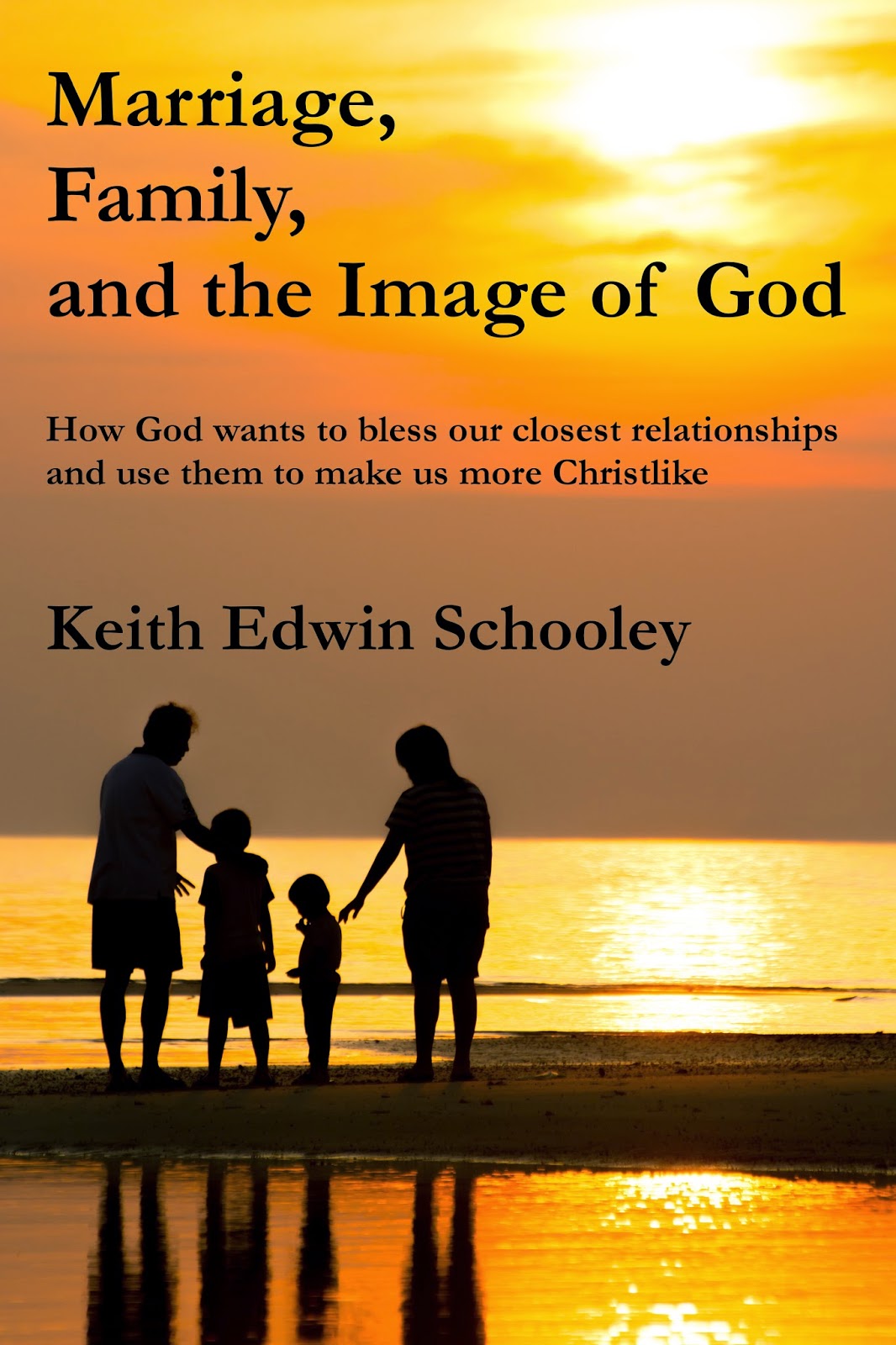
For more on marriage, check out my book, Marriage, Family, and the Image of God .
Friday, December 07, 2012
Jamal Jivanjee on Missional Confusion
Jamal Jivanjee has a great post on the Illuminate blog--not new, but I just stumbled onto it--called Missional Confusion & the Amway Gospel. Really great stuff. Here's a sample:
Excellent stuff. Check it out.
If you like this post, you may be interested in my book, What's Wrong with Outreach?

The evangelical system has become a glorified ‘pyramid’ scheme. Like the soap, we are taught to tell people about this amazing man named Jesus Christ who loves us and died for us. We tell the world that He is the living bread. We tell people that the water He gives will satisfy. We tell people that he comes to give us abundant life, etc… then, shortly after a person is interested in this Christ and says yes, the focus changes. Instead of discovering and experiencing the depths and beauty of this glorious man, we are quickly taught that there are things we must ‘do’ to get more and train more Christ ‘distributors’.Jivanjee also discusses the different parts of the body and how that factors in to going about the real mission of Christ in this world--very much like what I share in What's Wrong with Outreach.
Excellent stuff. Check it out.
If you like this post, you may be interested in my book, What's Wrong with Outreach?
Wednesday, December 05, 2012
TV News
We can learn a lot about the problems of the contemporary church by examining a seemingly unlikely source: television news.
Broadcast television news viewership has been declining for many years. There are several reasons: competition from 24-hour cable news outlets, the rise of news accessibility on the internet, and increasingly popular opinion-based news coverage appearing on all types of media. Present-day viewership is now less than half of what it was in 1980.
During the same time period, increasing pressure has been brought to bear on television news outlets to become financially self-sustaining. Once considered a public service by broadcasters, television news divisions have become subject to the same pressures as their entertainment divisions: generate advertising revenue by increasing ratings and market share. This has led to a trend toward so-called “soft news”—lifestyle, celebrity, and human-interest stories that function more as entertainment than serious information. Networks found that soft news stories would increase market share, especially when promoted heavily with teasers, so they pushed their news departments to air growing amounts of soft news, often over the objections of veteran journalists.
Broadcast television news viewership has been declining for many years. There are several reasons: competition from 24-hour cable news outlets, the rise of news accessibility on the internet, and increasingly popular opinion-based news coverage appearing on all types of media. Present-day viewership is now less than half of what it was in 1980.
During the same time period, increasing pressure has been brought to bear on television news outlets to become financially self-sustaining. Once considered a public service by broadcasters, television news divisions have become subject to the same pressures as their entertainment divisions: generate advertising revenue by increasing ratings and market share. This has led to a trend toward so-called “soft news”—lifestyle, celebrity, and human-interest stories that function more as entertainment than serious information. Networks found that soft news stories would increase market share, especially when promoted heavily with teasers, so they pushed their news departments to air growing amounts of soft news, often over the objections of veteran journalists.
Wednesday, November 28, 2012
Justin Lathrop: Don't Believe this Church Growth Myth
Check out this blog post: "Don't Believe this Church Growth Myth." Excellent points. Dovetails nicely with "The Analogy of Growth" chapter in What's Wrong with Outreach.
Thursday, November 22, 2012
What's Wrong with Outreach
Happy Thanksgiving, all!
 I have a new book out: What's Wrong with Outreach: Reexamining Evangelism, Discipleship, and the Purpose of Christian Life. It's available in Kindle format on Amazon and in ePub format at Barnes & Noble. Print edition available at my CreateSpace store. For more information, check out the Books page. I'll be about it soon, but for now, click the link and check it out!

Friday, October 12, 2012
Everything That's On Bob's Mind: Proof of Heaven?
Bob Mitton has an interesting post discussing the book Proof of Heaven in his latest blog post. Anyone who's read what I've written on NT Wright's Surprised by Hope will know that I like where he's going here:
In the end, my greatest concern is that this book will cause Christians to once again over-emphasize the idea of a disembodied heaven as our ultimate destiny. Whatever heaven (or as Jesus called it: "Paradise") may be, it is not permanent. The hope of Christianity is NOT floating around disembodied on butterfly wings. The hope of Christianity, as the Apostle Paul so clearly stated, is the physical resurrection of our bodies in the same way that Jesus was physically resurrected. Whatever the new heavens and earth will be, it will be inhabited by physical beings resurrected by the power of God.Check it out.
Wednesday, June 29, 2011
It Was Twenty Years Ago Today....
Twenty years ago today I sealed my fate.
I had met Cecile two years earlier at a temporary job. We should have known one another less than three weeks. She had just been through a bitter divorce and was not crazy about men. To an engaged girl at our table she had said, "Give me five minutes and I'll have you talked out of it." When she found out I was a follower of Jesus, her first question was, "So what's this crap about women submitting to men, anyway?"
But she was searching--deeply, deeply searching--and when she came to Jesus she fell harder than anyone I'd ever known. Her life was transformed virtually overnight. It was the most beautiful thing I'd ever seen. And so I began falling in love with her, despite myself. We struggled, that summer, with an attraction neither one of us wanted to admit to or to act on, and when I left for grad school that year, we had no commitment to one another.
But without me being there as an ulterior motive, she kept going to church. She read the Bible through, in about eight months, even though she had never been much of a reader. We kept in contact by letters and recorded cassettes. She asked me questions about my faith and my views of life; I learned everything I could about her--who she was, what she cared about. And by the time I came back home the following summer, I knew I was going to ask her to marry me.
We went to eat at Mexican Village, then took the Ambassador Bridge over to Windsor, sat in a park watching the sunset over the Detroit skyline, and I asked her to marry me. Disconcertingly, she welled up with tears and didn't answer at first. But she eventually said yes, which led up to that day, twenty years ago today, when we got married.
Not at our own church, sadly. They wouldn't allow divorcees to be married there. And we never knew until later to what extent Bill, our college-and-career pastor, had gone out on a limb to marry us. We found a church near my home and made the preparations. Guys have no clue, until they've been through it, how many preparations even a "small" wedding entail. For the groom, the necessary ingredients are a license, a ring, and a getaway car. Brides have slightly more elaborate ideas. And although all kinds of crazy things went wrong at the rehearsal and the morning of the wedding--a groomsman forgot to show up to the rehearsal, a friend who made our wedding cake got into a car accident and spent the night fixing the cake, Bill locked his suit in his car--the ceremony itself was beautiful.
And so we were married, and when we left the reception I giddily took off down I-696, missed the turnoff down I-275, and drove probably 20 miles westbound on I-96 before realizing that we were headed toward Lansing instead of toward our hotel in Romulus. The following day we left for our honeymoon in Ludington, which was probably about the happiest week of my life.
We have a framed engagement photo in our bedroom, and occasionally I look at that picture, at the couple so full of hope. I miss them. The years that have gone by haven't been what either one of us had expected. But there is no one I would rather have gone on this journey with than Cecile. No one even comes close.
Twenty years ago today, I married the most remarkable woman I know, or can even imagine. She has been the best friend anyone could ever have, the most loyal, the most fun, the most supportive. Although I was instrumental in leading her to faith, she has been the one who has most strongly helped me to continue in faith myself. She has gone with me to the UP, to Pennsylvania, and back to Detroit with scarcely any complaint. She looks for and encourages the best in me, even though she's seen me at my worst. She's kind and loving and far more elegant than she has any idea of. She has given me three wonderful sons. And whatever else is happening in this world, whatever hurtfulness or cruelty or unkindness comes against us in day-to-day life, she has made a home that is always safe to come to, where we can be ourselves. Where it doesn't matter what we have or don't have, what we've achieved or haven't achieved, where the only thing that matters is that we love God and love one another. She is truly the greatest blessing of my life.
What we have together is what I wish every couple had. I wish I could give away our secret, but the truth is, I don't really know what the secret is. If I had to boil it down, I'd say that "us" is more important than "me" to both of us. But really, I think she lives that out better than I do.
So here's to my Cecile. Twenty years ago today, I made the best decision of my life. I can't possibly express the gratitude I have for her. Here's looking forward to the next twenty.
For more on marriage, check out my book, Marriage, Family, and the Image of God .
I had met Cecile two years earlier at a temporary job. We should have known one another less than three weeks. She had just been through a bitter divorce and was not crazy about men. To an engaged girl at our table she had said, "Give me five minutes and I'll have you talked out of it." When she found out I was a follower of Jesus, her first question was, "So what's this crap about women submitting to men, anyway?"
But she was searching--deeply, deeply searching--and when she came to Jesus she fell harder than anyone I'd ever known. Her life was transformed virtually overnight. It was the most beautiful thing I'd ever seen. And so I began falling in love with her, despite myself. We struggled, that summer, with an attraction neither one of us wanted to admit to or to act on, and when I left for grad school that year, we had no commitment to one another.
But without me being there as an ulterior motive, she kept going to church. She read the Bible through, in about eight months, even though she had never been much of a reader. We kept in contact by letters and recorded cassettes. She asked me questions about my faith and my views of life; I learned everything I could about her--who she was, what she cared about. And by the time I came back home the following summer, I knew I was going to ask her to marry me.
We went to eat at Mexican Village, then took the Ambassador Bridge over to Windsor, sat in a park watching the sunset over the Detroit skyline, and I asked her to marry me. Disconcertingly, she welled up with tears and didn't answer at first. But she eventually said yes, which led up to that day, twenty years ago today, when we got married.
Not at our own church, sadly. They wouldn't allow divorcees to be married there. And we never knew until later to what extent Bill, our college-and-career pastor, had gone out on a limb to marry us. We found a church near my home and made the preparations. Guys have no clue, until they've been through it, how many preparations even a "small" wedding entail. For the groom, the necessary ingredients are a license, a ring, and a getaway car. Brides have slightly more elaborate ideas. And although all kinds of crazy things went wrong at the rehearsal and the morning of the wedding--a groomsman forgot to show up to the rehearsal, a friend who made our wedding cake got into a car accident and spent the night fixing the cake, Bill locked his suit in his car--the ceremony itself was beautiful.
And so we were married, and when we left the reception I giddily took off down I-696, missed the turnoff down I-275, and drove probably 20 miles westbound on I-96 before realizing that we were headed toward Lansing instead of toward our hotel in Romulus. The following day we left for our honeymoon in Ludington, which was probably about the happiest week of my life.
We have a framed engagement photo in our bedroom, and occasionally I look at that picture, at the couple so full of hope. I miss them. The years that have gone by haven't been what either one of us had expected. But there is no one I would rather have gone on this journey with than Cecile. No one even comes close.
Twenty years ago today, I married the most remarkable woman I know, or can even imagine. She has been the best friend anyone could ever have, the most loyal, the most fun, the most supportive. Although I was instrumental in leading her to faith, she has been the one who has most strongly helped me to continue in faith myself. She has gone with me to the UP, to Pennsylvania, and back to Detroit with scarcely any complaint. She looks for and encourages the best in me, even though she's seen me at my worst. She's kind and loving and far more elegant than she has any idea of. She has given me three wonderful sons. And whatever else is happening in this world, whatever hurtfulness or cruelty or unkindness comes against us in day-to-day life, she has made a home that is always safe to come to, where we can be ourselves. Where it doesn't matter what we have or don't have, what we've achieved or haven't achieved, where the only thing that matters is that we love God and love one another. She is truly the greatest blessing of my life.
What we have together is what I wish every couple had. I wish I could give away our secret, but the truth is, I don't really know what the secret is. If I had to boil it down, I'd say that "us" is more important than "me" to both of us. But really, I think she lives that out better than I do.
So here's to my Cecile. Twenty years ago today, I made the best decision of my life. I can't possibly express the gratitude I have for her. Here's looking forward to the next twenty.
For more on marriage, check out my book, Marriage, Family, and the Image of God .
Subscribe to:
Posts (Atom)